Where travel agents earn, learn and save!


News / Four things I had wrong about China (and what changed my mind)
Breaking China stereotypes one at a time

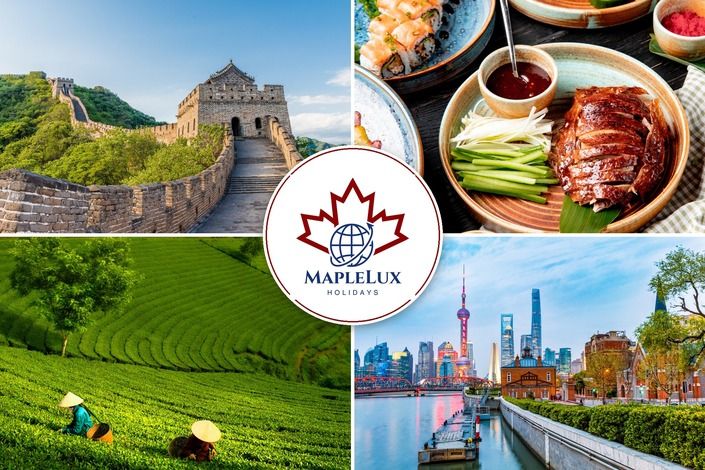
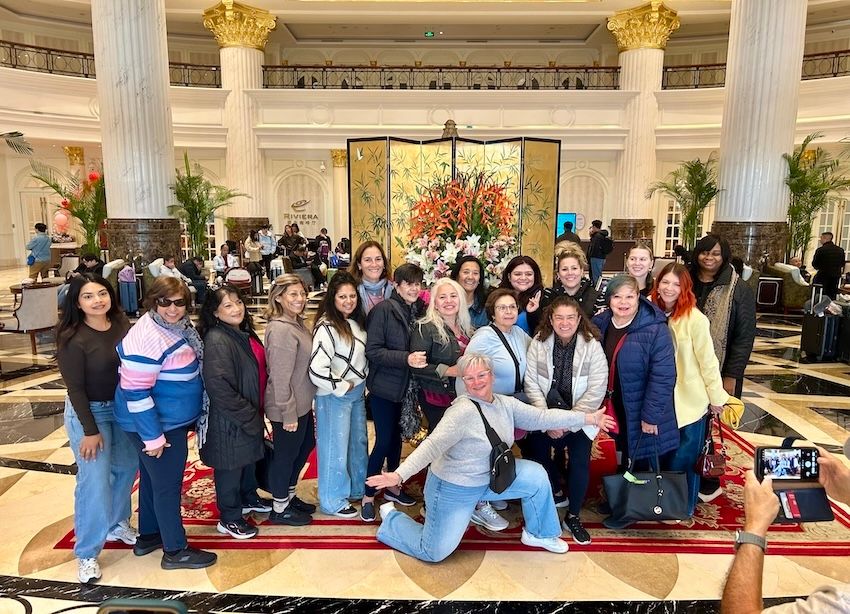
Global Agents has joined Maplelux Holidays' Amazing China FAM this fall. Here is what a week travelling between Beijing and Shanghai did to the perceptions I brought with me.
I arrived in Beijing on October 28 carrying only one bag, a neck pillow, and preconceived notions about the country, based mainly on the opinions of people who have never visited China. Is it safe? What are you going to eat? Isn't it just the Great Wall and a lot of crowds?
I didn't have good answers. I'd never been either.
Eight days later, I flew out of Shanghai with far too many photos on my phone and a list of things I’d had wrong. If you sell travel, your clients will come with similar preconceptions and will be asking you the same questions. So here is how I answer them now.
“It isn't safe”
This is always the first question, so let's get it out of the way.
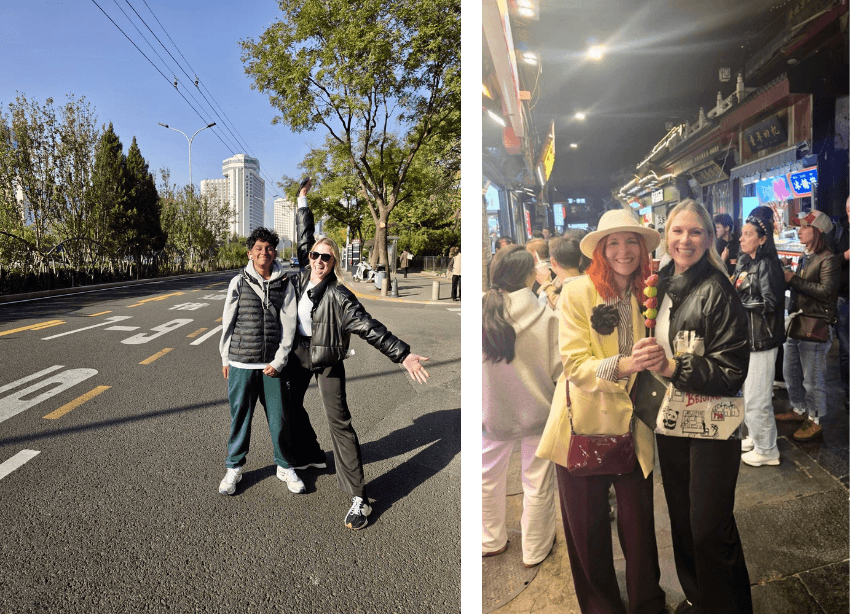
One night in Shanghai, a few of us from the FAM, all women, were still out on the Bund at 11 p.m. So were thousands of other people, out for a stroll and in no hurry to go home. I stood there trying to work out what it reminded me of. Times Square? No. The closest I could get was Disneyland. Same crowds, same good mood, better dumplings.
That was how the whole week went. Beijing, Wuxi, Suzhou, Hangzhou, Shanghai: I can't point to one moment when I felt uneasy, and I'm someone who notices.
Do I still tell clients to read the Government of Canada's travel advice before they go? Of course, same as for anywhere else we send people. Respect the local rules, keep your passport on you and listen to your guide. But the China a lot of Canadians picture and the China I walked around at night did not look like the same country.
“It's the Great Wall, and then what?”
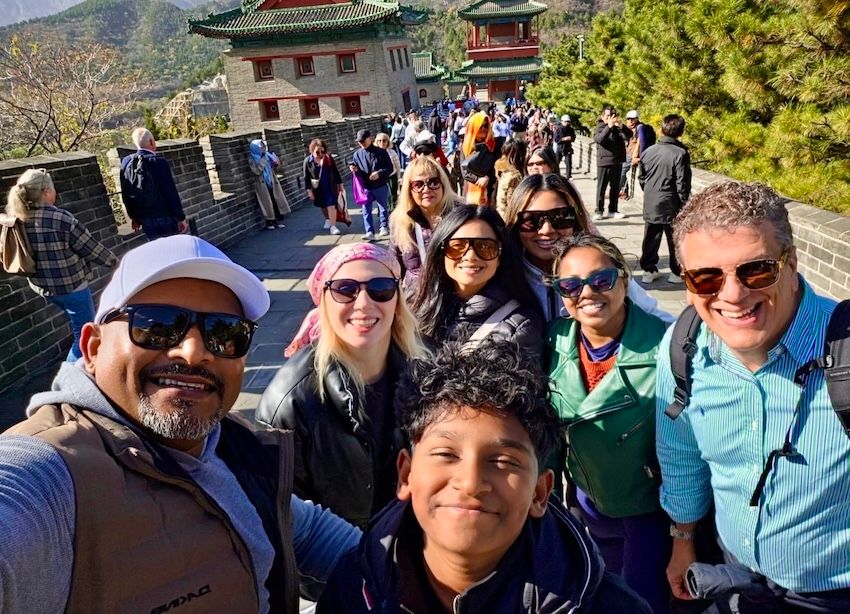
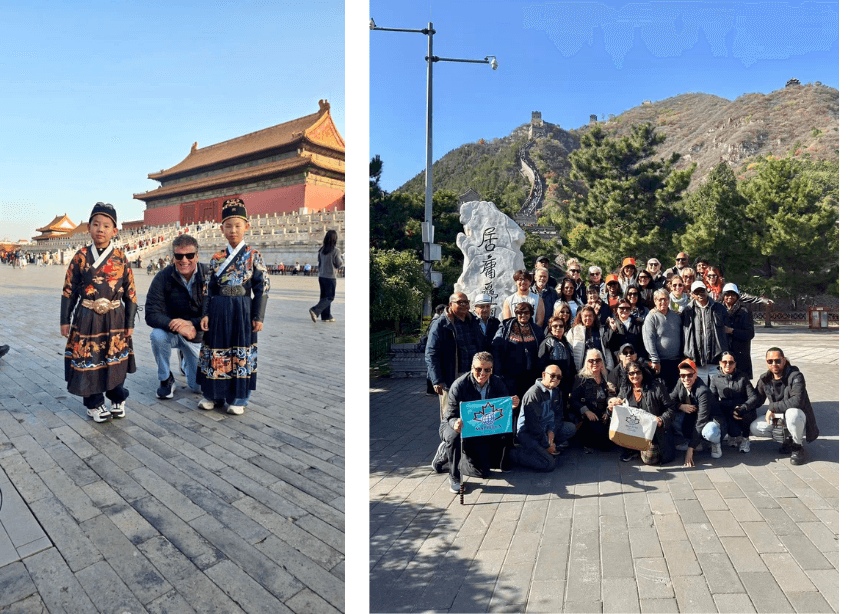
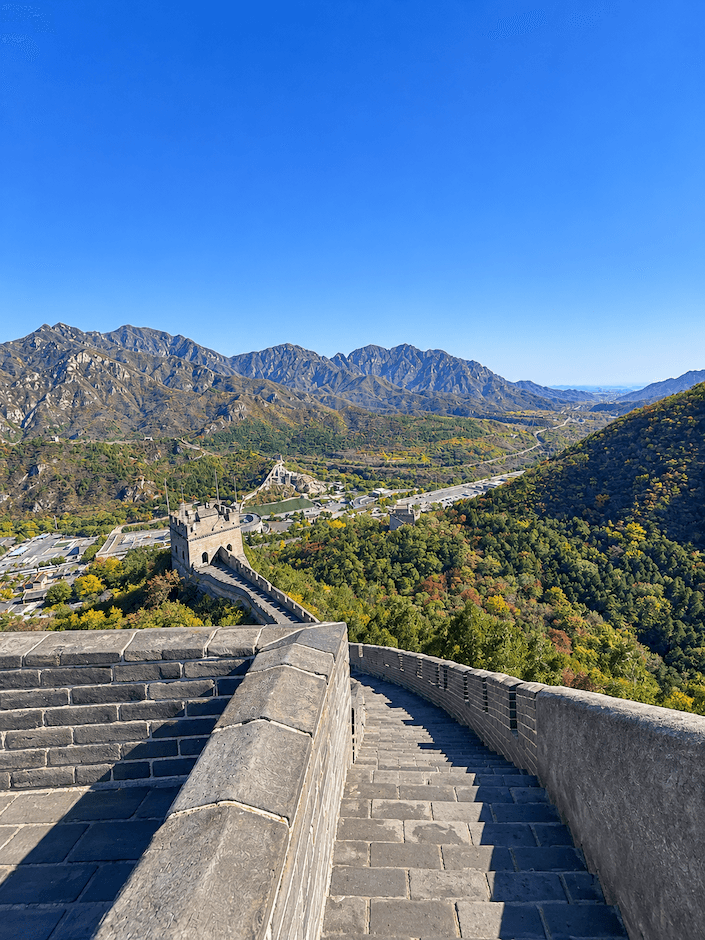
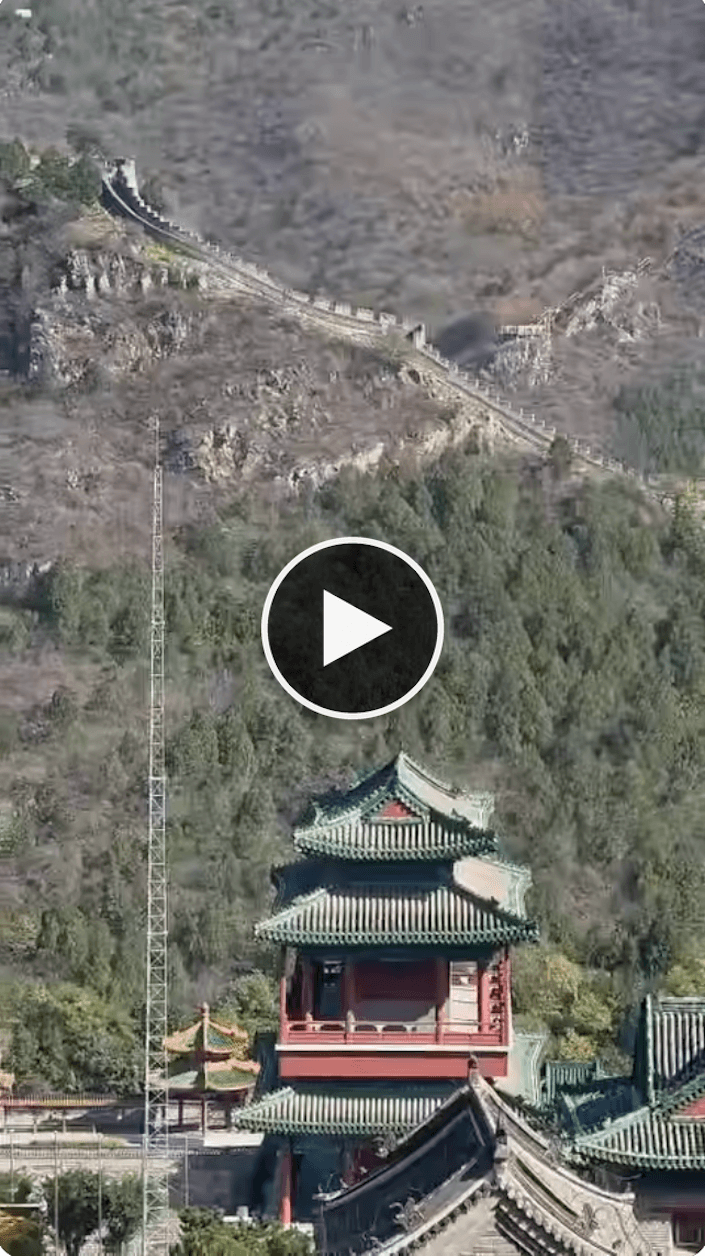
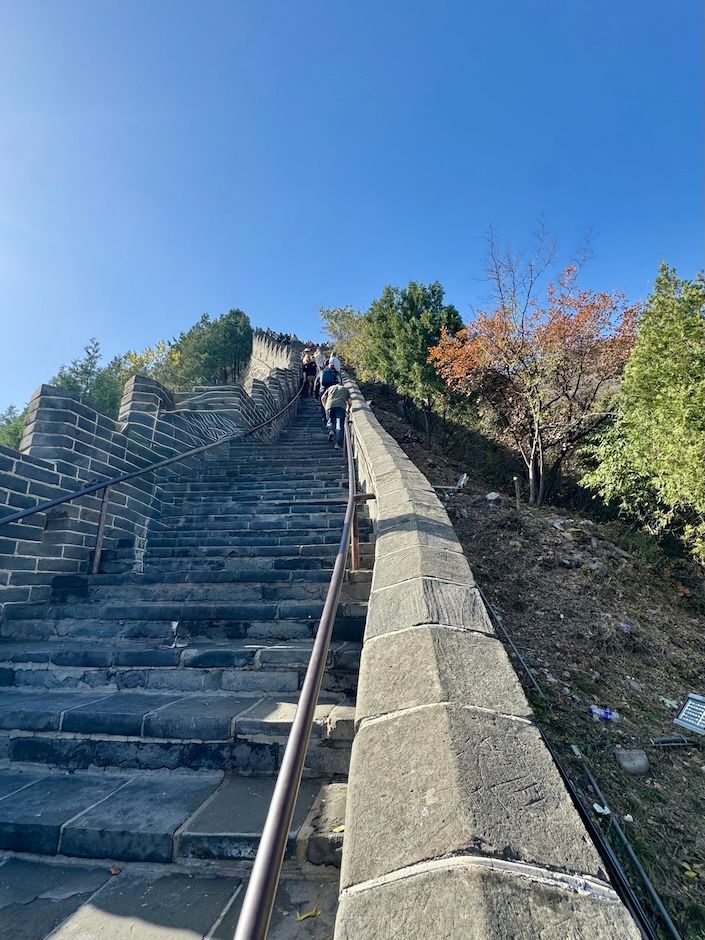
The Great Wall is something you have to see for sure. I can hardly believe that I was on top of it. It's on the list of New Seven Wonders of the World and for years I had only seen it in documentaries and wished that someday I would be able to visit. And then, all of a sudden, I was there, walking along the Juyongguan section of the Great Wall (about an hour from Beijing), gasping for air and smiling, thinking "Wow, I am really standing here." I had never seen a photo that captured how big the Great Wall really is. The Great Wall goes up one mountain, down the other side and continues as long as you can see.
One of the most interesting things I learned is that it isn't actually one long wall. It's a great chain of walls, trenches, watchtowers and fortresses stretching more than 21,000 km across northern China. Different dynasties built different sections, expanding and reinforcing the older parts over centuries. The Ming-era wall alone runs roughly 8,800 km.
China Beyond the Wall
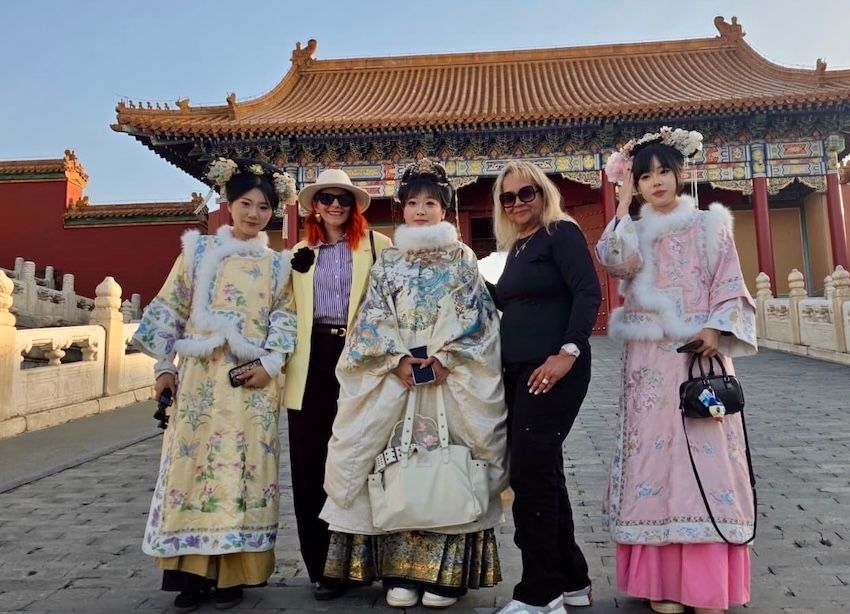
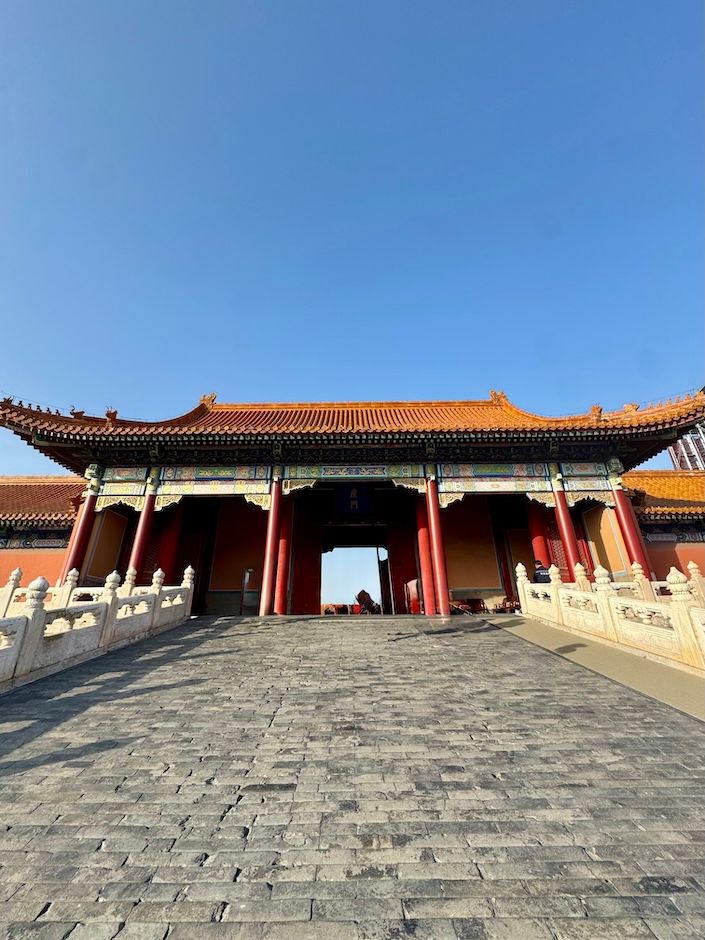
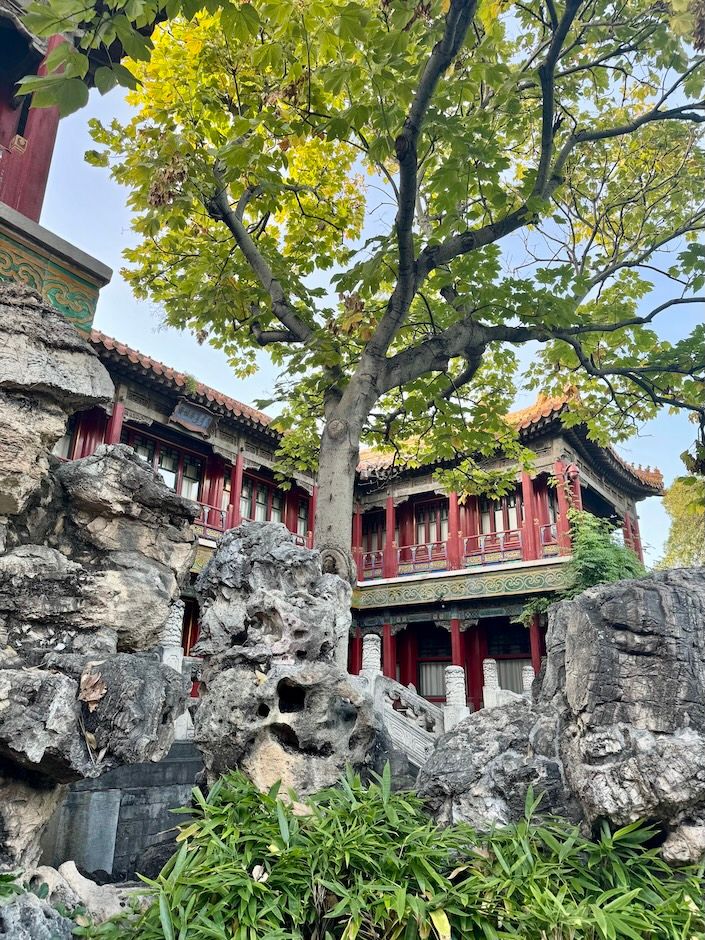
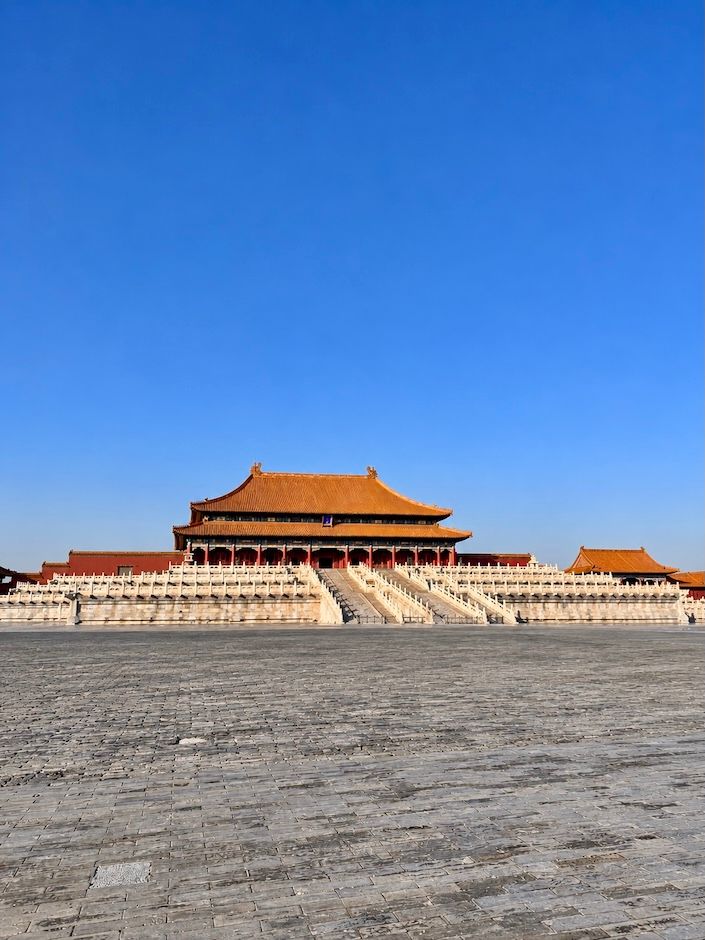
Another place not to be missed in Beijing is the Forbidden City. This place lies in the heart of Beijing, and is the largest and best-preserved palace in the world. It was built in 14 years by approximately one million people. According to legend, the Forbidden City has 9,999 rooms because the number 9 is considered to bring luck. It required the services of approximately 10,000 people for a single family, including 400 chefs. (400 chefs … wow, that sounds like my kind of place).
The Forbidden City was home to 24 emperors and was converted into a Palace Museum after the abdication of China’s last emperor, Puyi. It now houses over 1.8 million historical artifacts.
There is a question brewing there … why is it called the Forbidden City? Well, the answer is pretty simple. It is called the Forbidden City because regular people were strictly banned from entering it for nearly 500 years. Only the emperor, his family, high-ranking officials, and palace servants were allowed inside, and anyone else who tried to enter faced severe punishment.
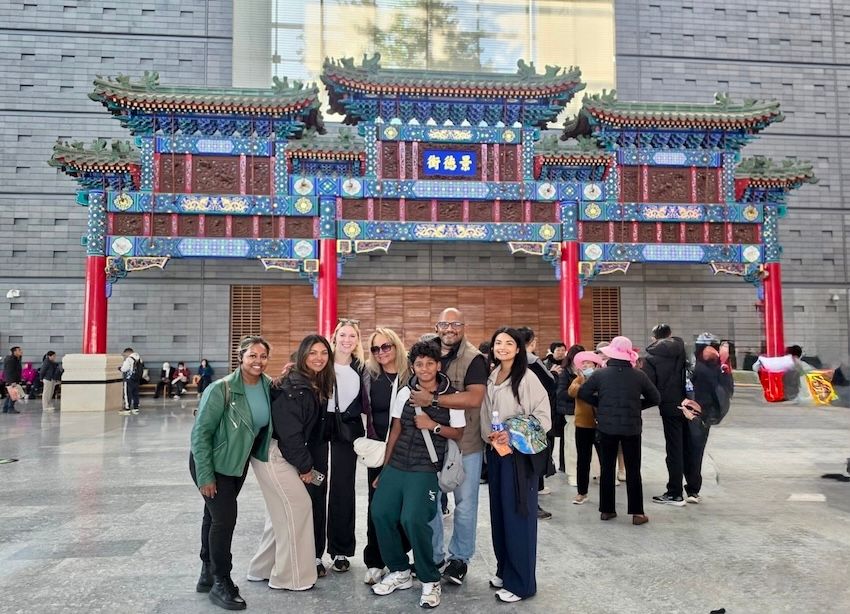
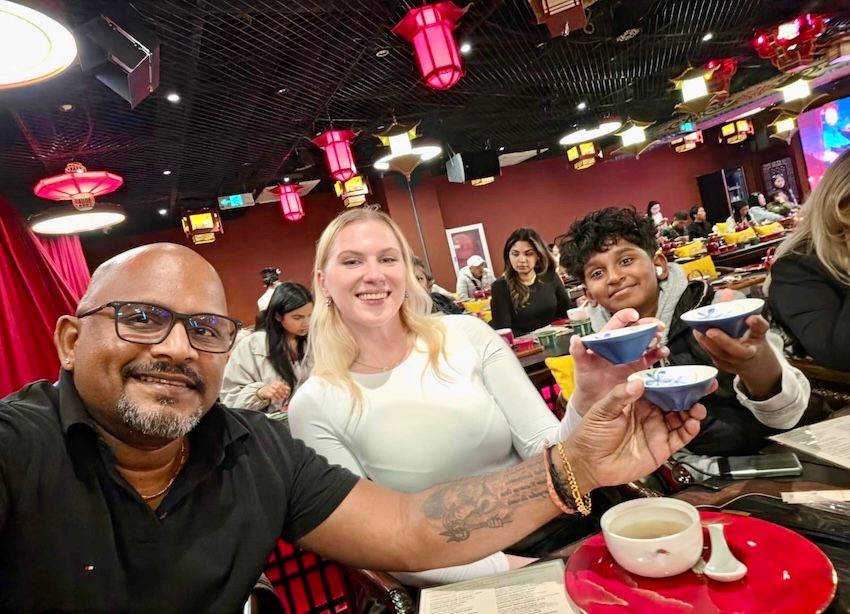
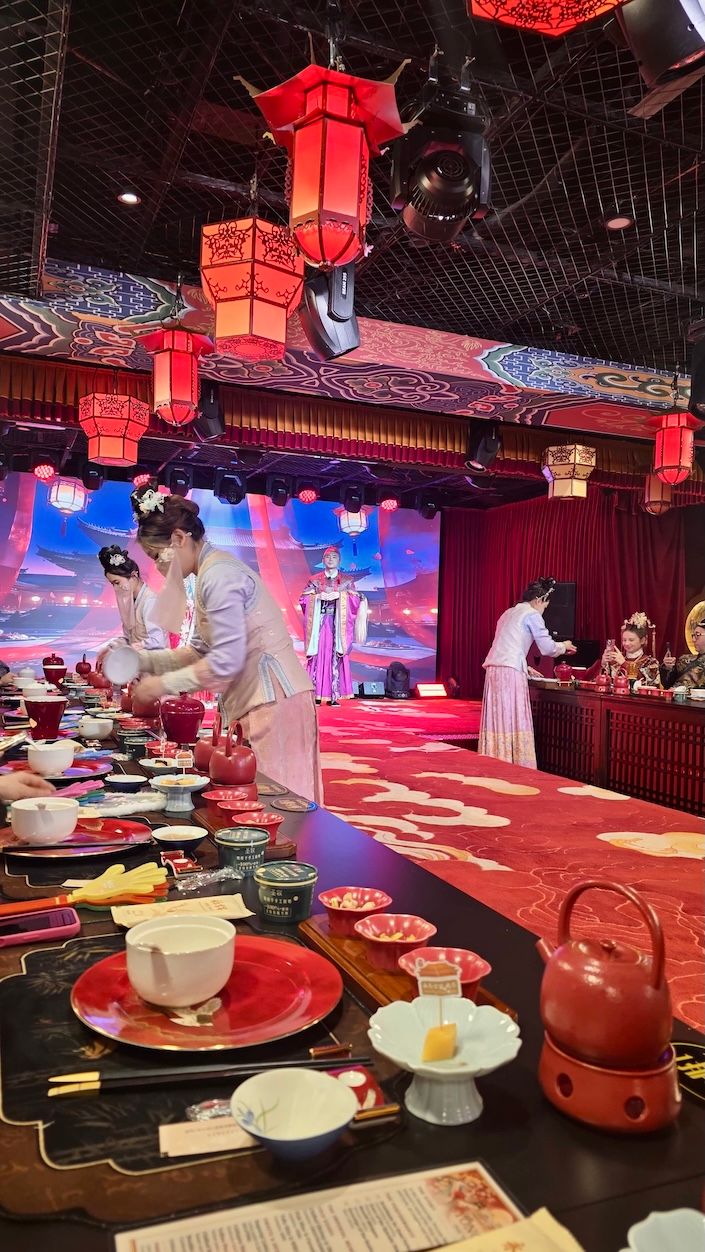
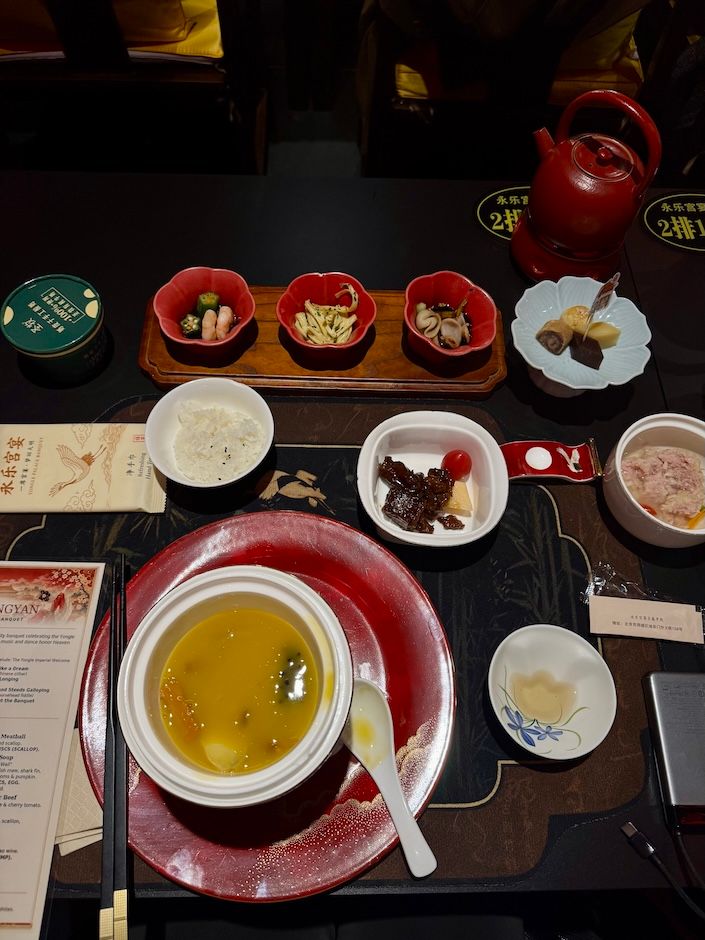
Following the visit to the Forbidden City, I had the opportunity to eat like the very emperors who once occupied the place. Maplelux has organized a dinner at the Yongle Imperial Banquet, which is an entertainment venue based on the royal court during the reign of the Yongle Emperor of the Ming dynasty, who ordered the construction of the Forbidden City. Dishes after dishes were served in imperial style with live musicians and dancers performing in traditional costumes right next to our tables, making it less like watching a performance and more like a guest at the palace.
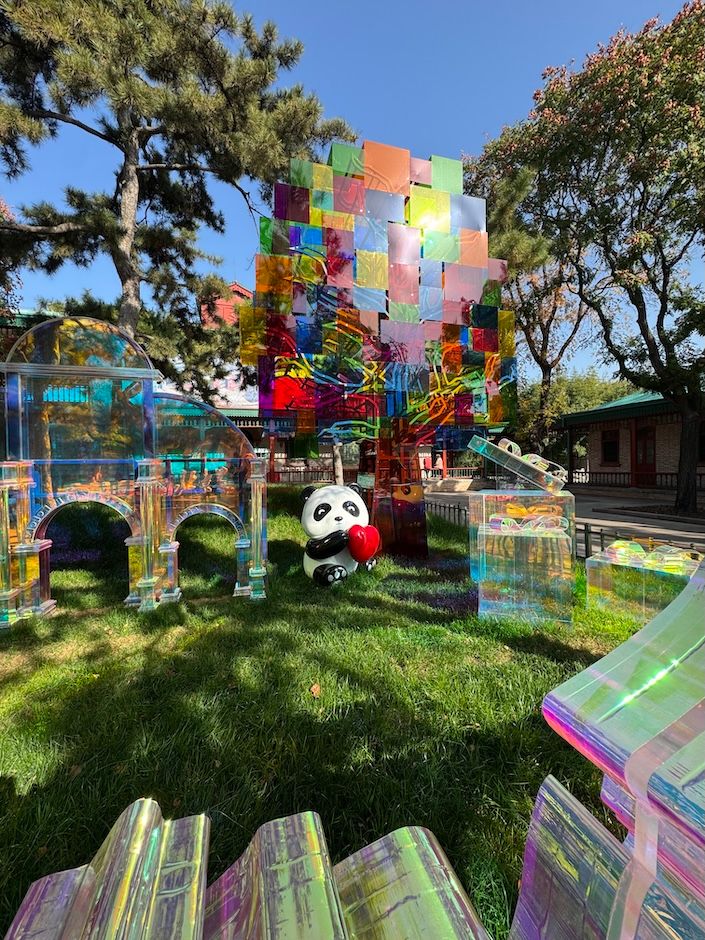
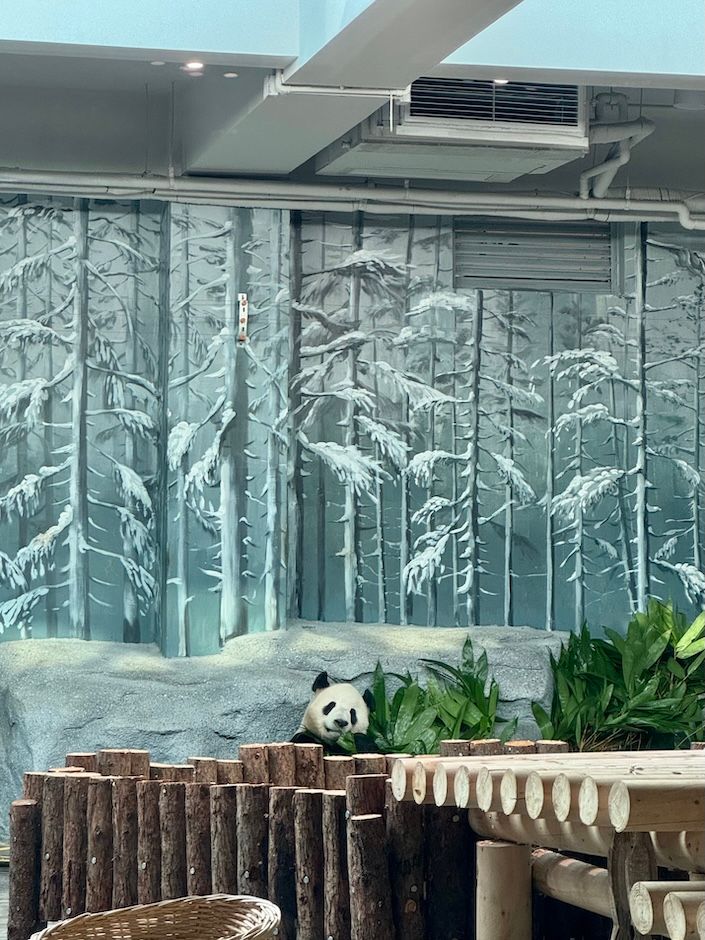
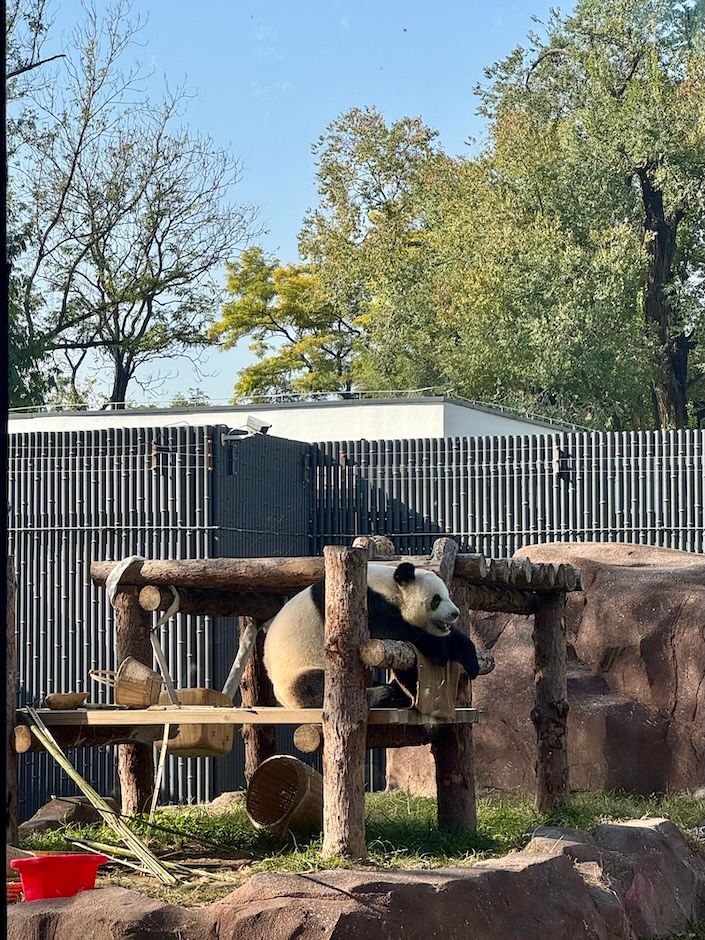
There is another reason why I wanted to visit China. You might have guessed it… pandas! While wild pandas only live in the misty bamboo mountains of Sichuan, Shaanxi, and Gansu, you don't have to leave Beijing to see them. The Beijing Zoo has housed China’s national treasure since 1955—celebrating its first cub birth in 1963—making it easy to meet them right in the capital.
Canadians may remember Er Shun and Da Mao, the pair China loaned to the Toronto and Calgary zoos from 2013 to 2020.
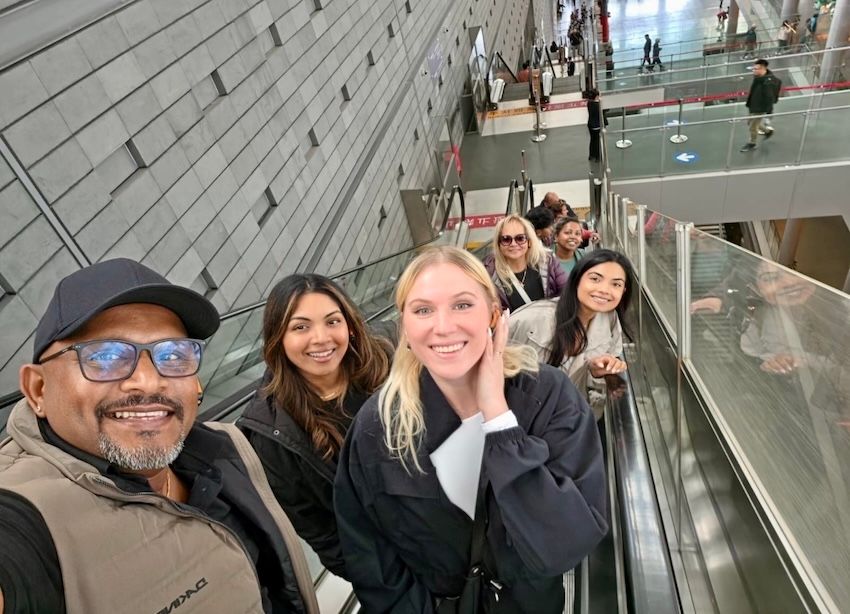
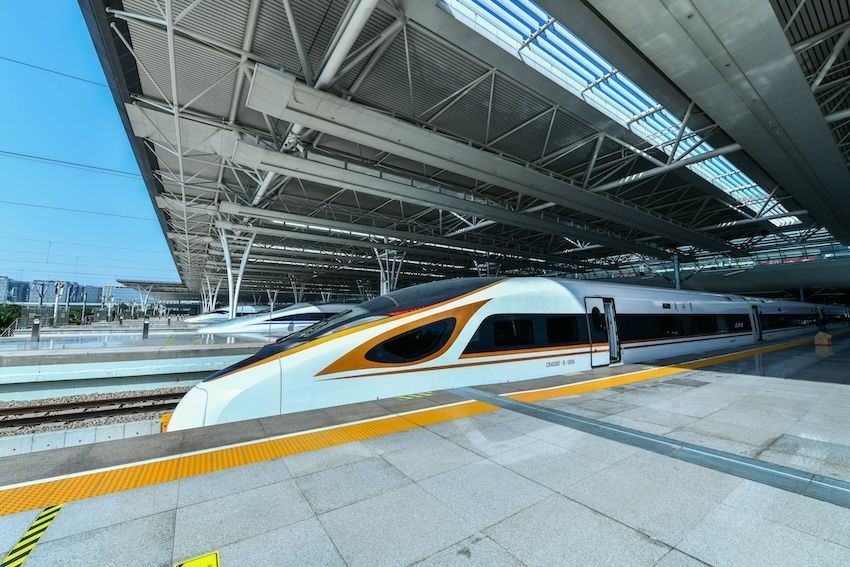
These are all the things I’d seen all over people’s Instagram pages. What I wasn’t ready for was everything south of Beijing. We boarded a high-speed train in the afternoon and stepped off in Wuxi five and a half hours later, more than 1,000 km away. The train ride is an experience on its own. These trains run at anywhere from 200 to 350 km/h, yet you can’t feel the speed at all. The ride is surprisingly smooth, even relaxing, which is impressive considering how fast you’re actually going.
China's train system is impressively well organized. The stations are modern, easy to navigate and full of places to eat. And if you don't have time to grab something before boarding, many trains have a dining car serving meals, snacks and drinks, at very friendly prices. A beer costs around $1.50 to $2!
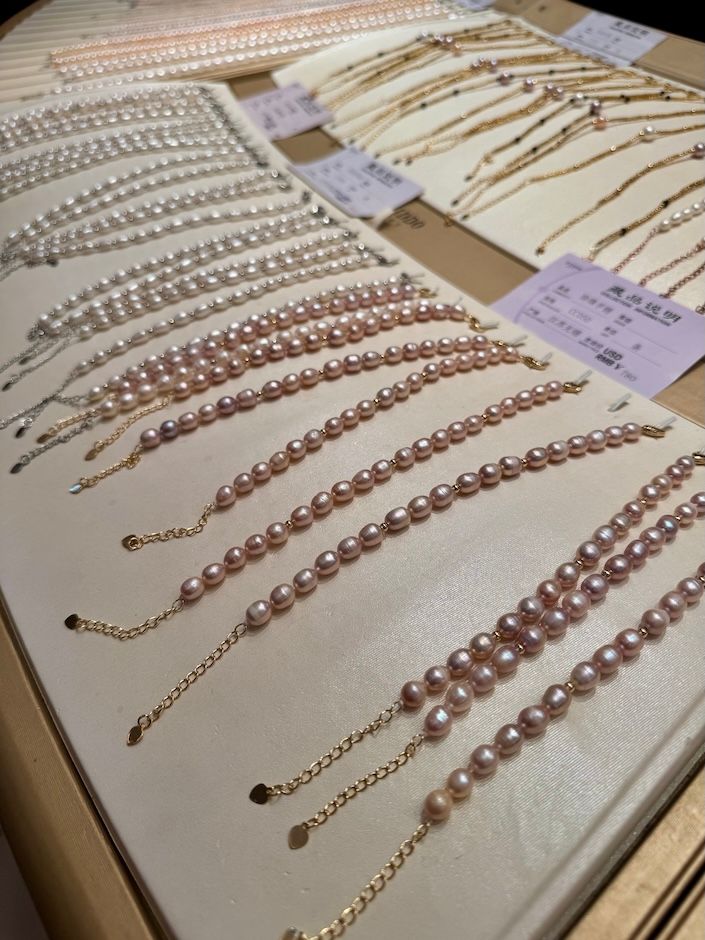
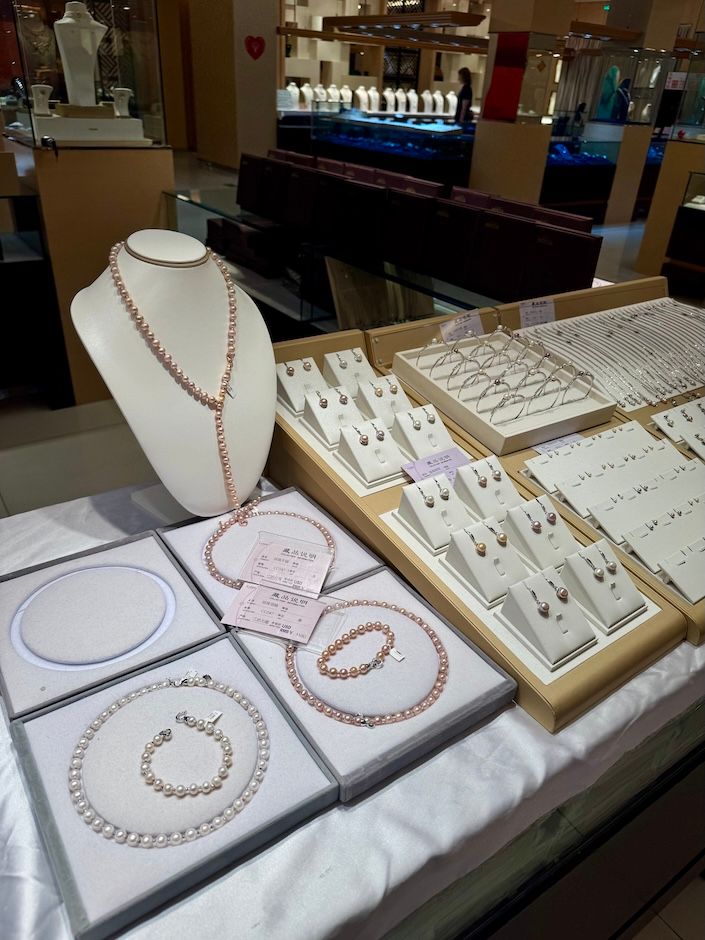
From there, the trip changed colour completely. Wuxi sits on Taihu, one of China's largest freshwater lakes, and its freshwater pearls are reason enough to visit this city. I highly encourage you to visit Wuxi pearl stores, where you can buy excellent-quality pearls for far below what you would pay at home (the shop told us the golden ones cost the most, in case a client asks).
Next stop, Suzhou! Now what you will see there is nothing like Beijing or Wuxi. Suzhou is 2,500 years old, with canals, stone bridges and the UNESCO-listed Lingering Garden. Many Chinese TV shows and movies were shot there, so some of you might be very familiar with the town already! Suzhou is also known as the Venice of the East, so you can imagine how mesmerizing it was to travel through the canals, looking at the old architecture combined with modern shops.
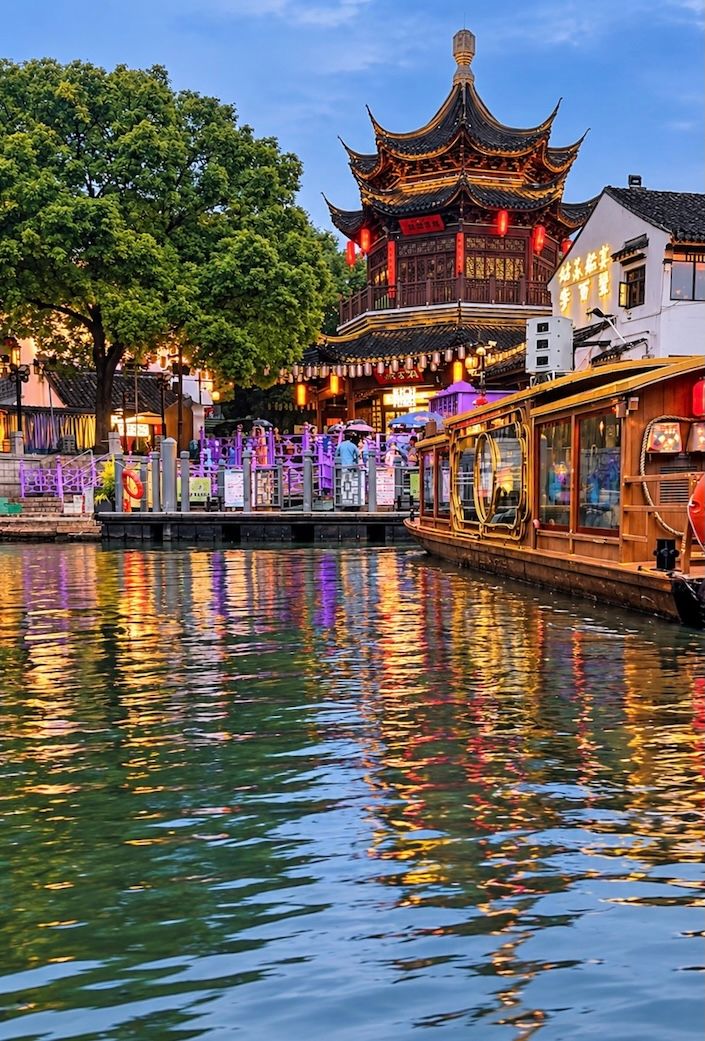
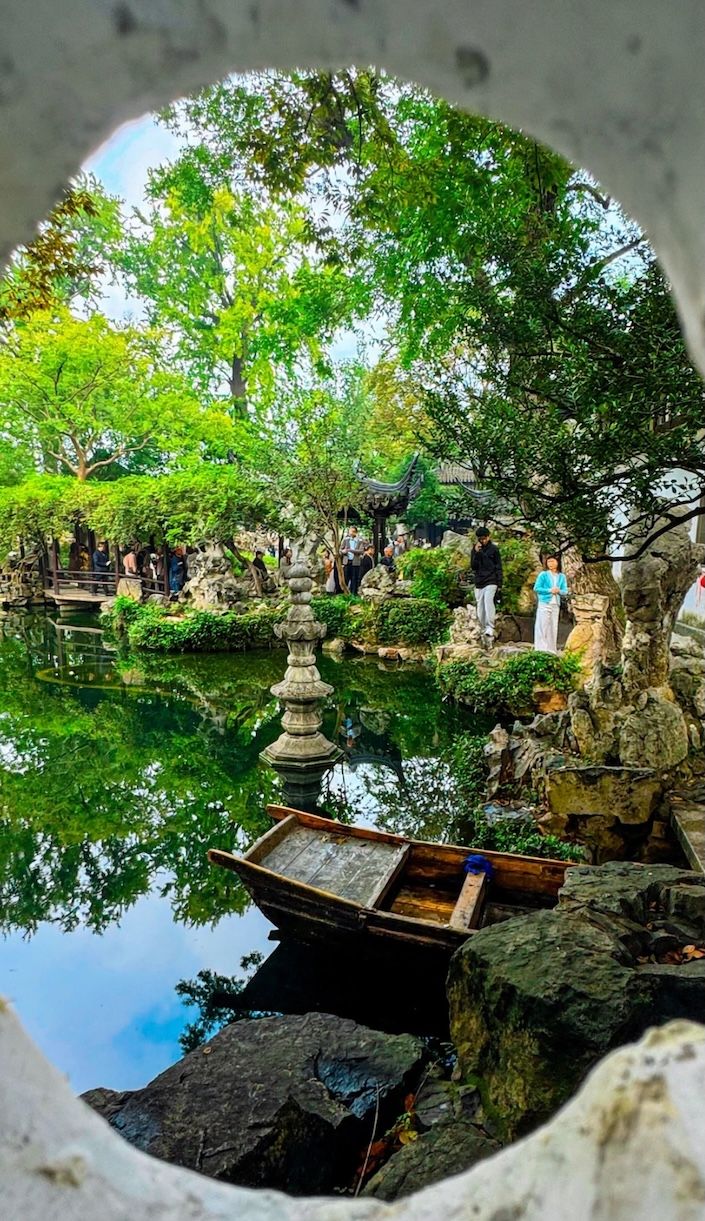
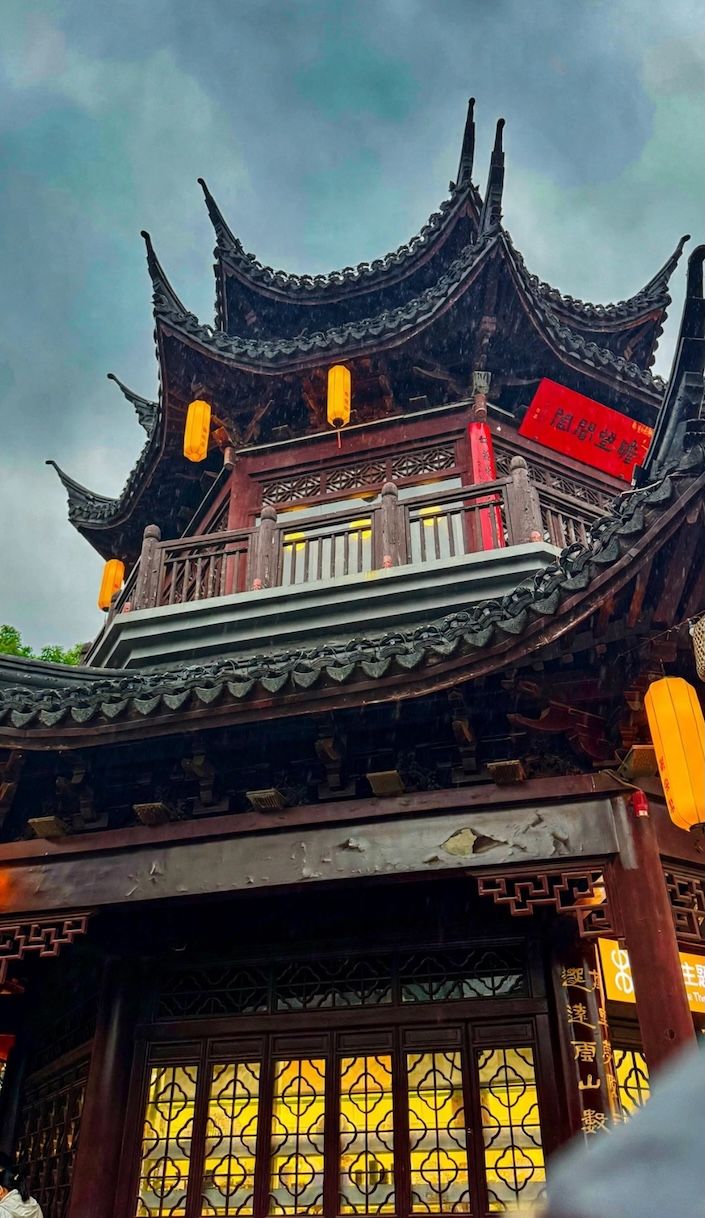
For the best taste of old Suzhou, take a stroll along Shantang Street or Pingjiang Road. Both follow the canals, lined with whitewashed houses, little shops, teahouses and street-food stalls.
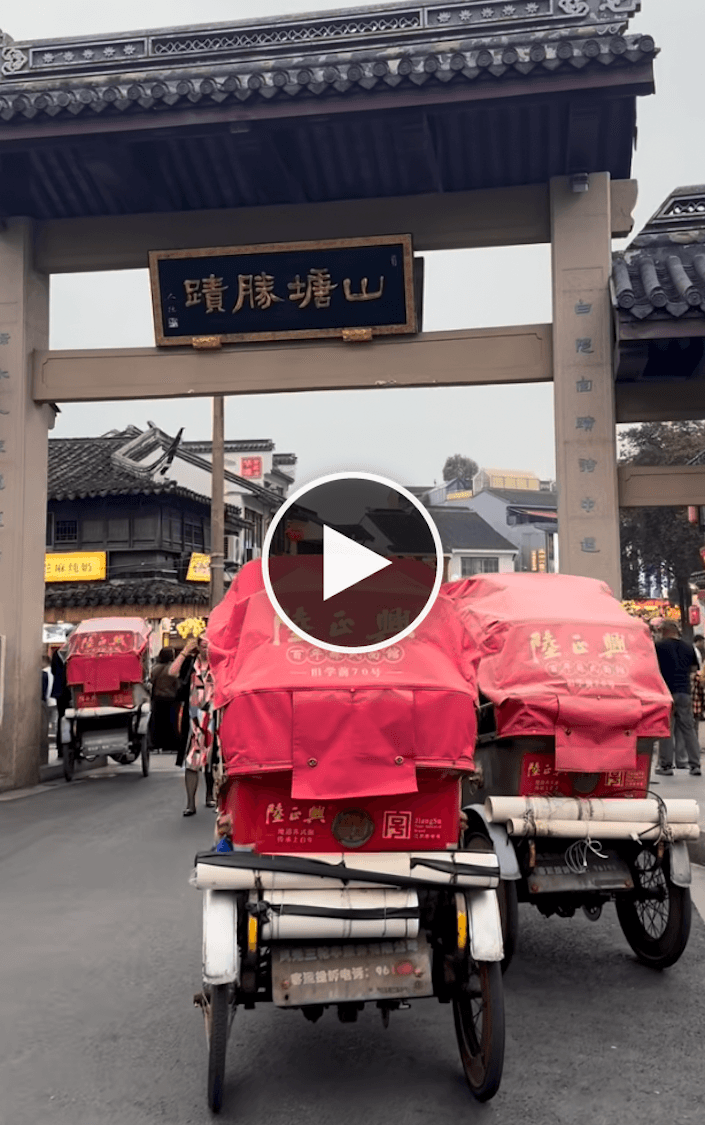
Another place to visit while you are in Suzhou is a silk museum. I learned that a single cocoon unwinds up to 1 km of thread, and I have not looked at a scarf the same way since. In the museum, you will learn about the silk-making art and will be able to buy some incredible pieces, from bed sheets to literally silk underwear.
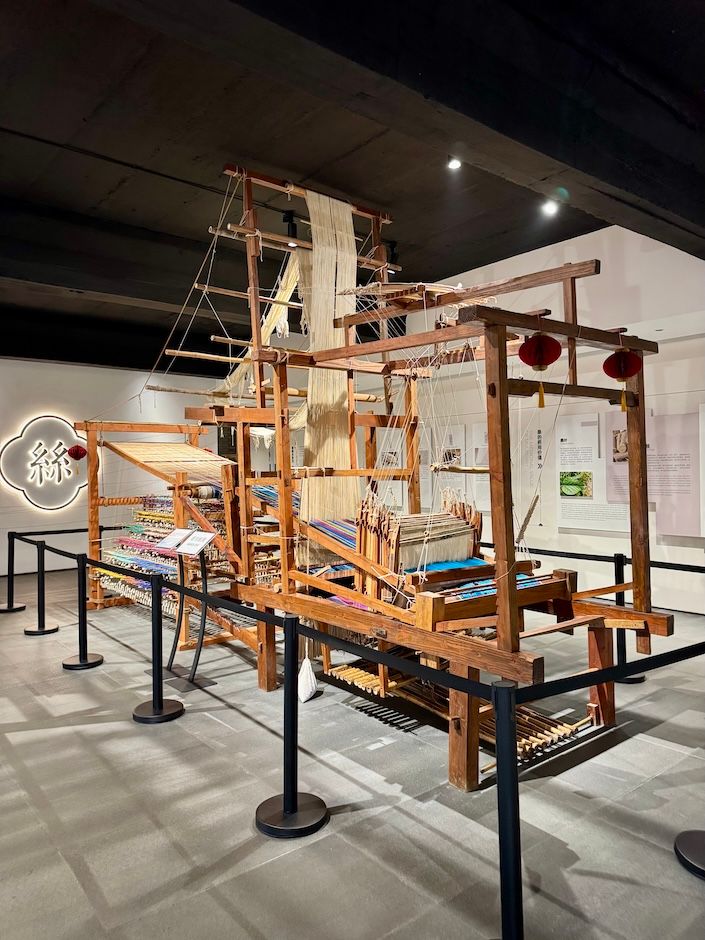
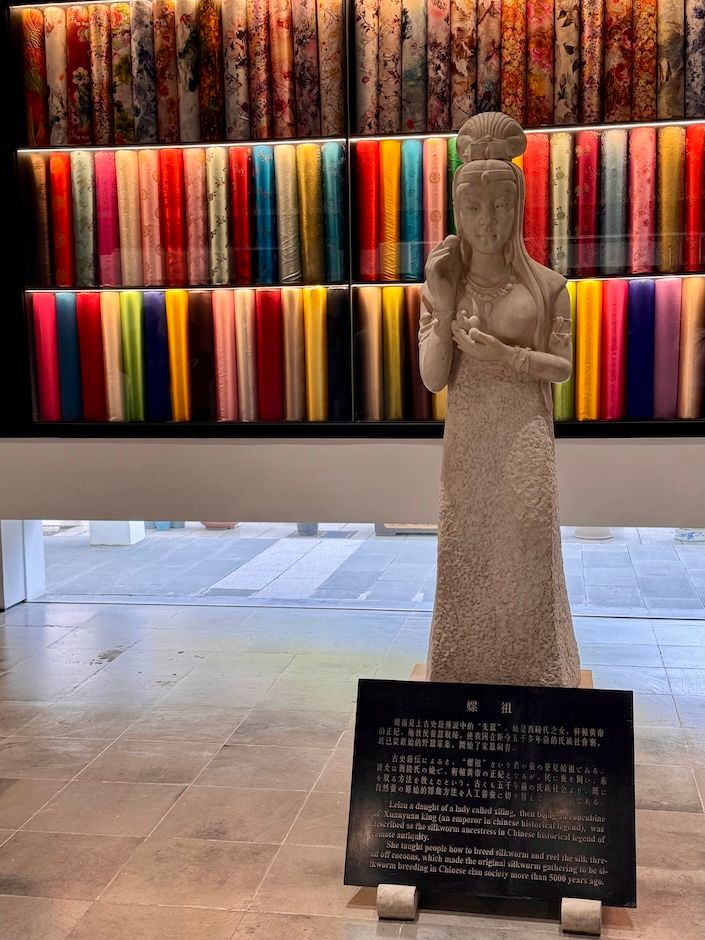
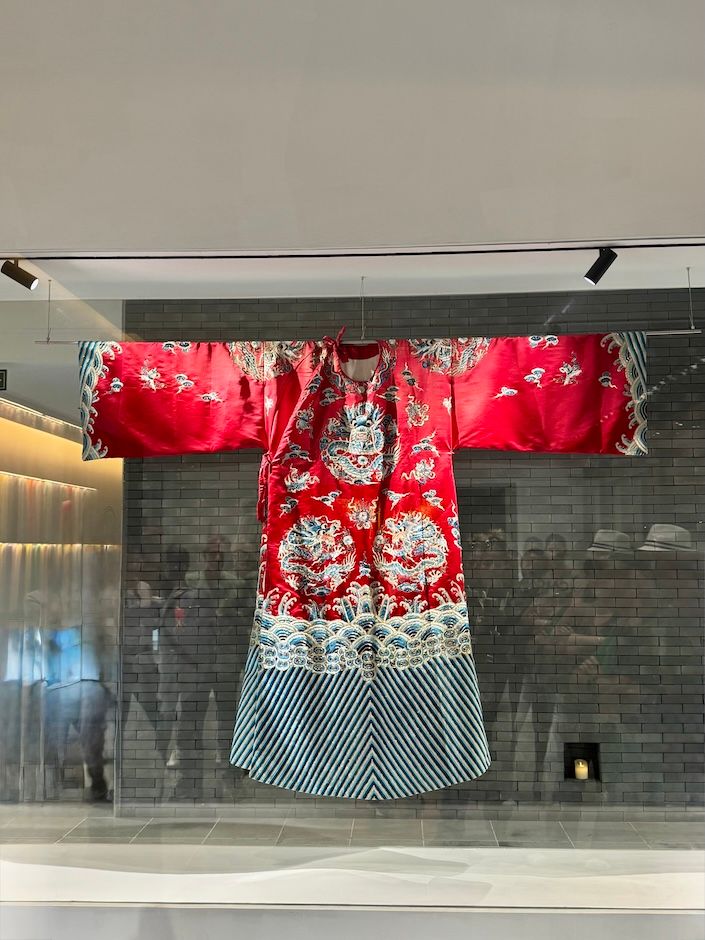
Then Hangzhou, the city Marco Polo raved about, where we walked through the Longjing tea terraces and took a boat out on West Lake.
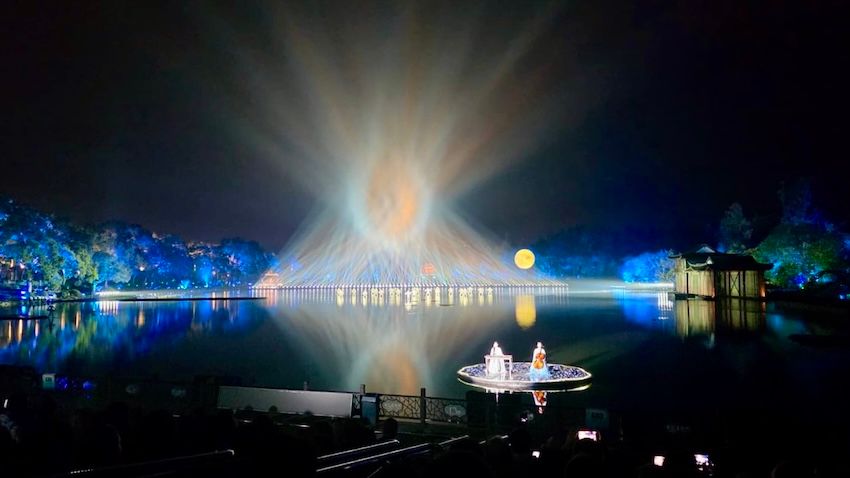
If your clients add one optional excursion to their China trip, make it Enduring Memories of Hangzhou (formerly Impression West Lake). Directed by Zhang Yimou, the man behind Beijing’s Olympic ceremonies, the show is staged on the lake itself: the stage hides just below the surface, so hundreds of performers appear to dance across the water while the hills light up behind them. There’s no dialogue to follow, just an hour of music, light and legend. It runs most evenings from spring to late fall and is offered as an optional on Maplelux’s Hangzhou night.
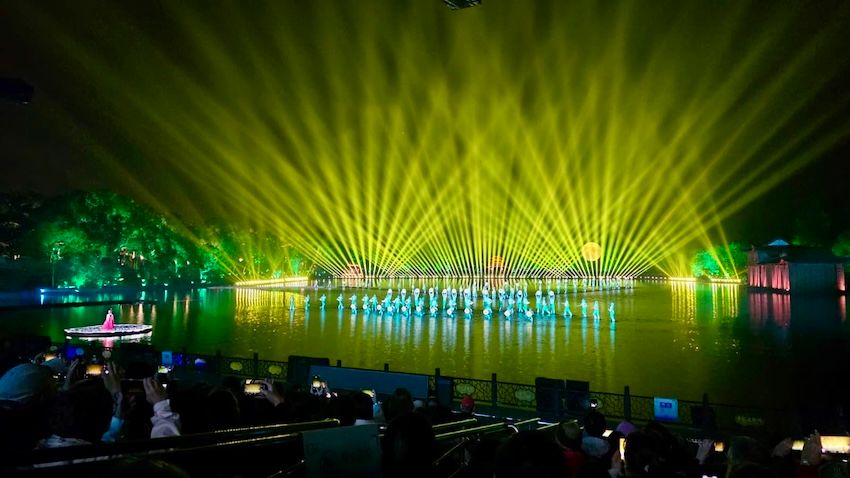
Another reason to stop in Hangzhou is the one I mentioned above: the Longjing Tea Village. It is home to the original sacred tea bushes in Lao Longjing (Old Longjing) that the Qianlong Emperor of the Qing Dynasty designated as imperial tribute. You simply can’t visit China without adding a tea plantation and a ceremony to your itinerary.
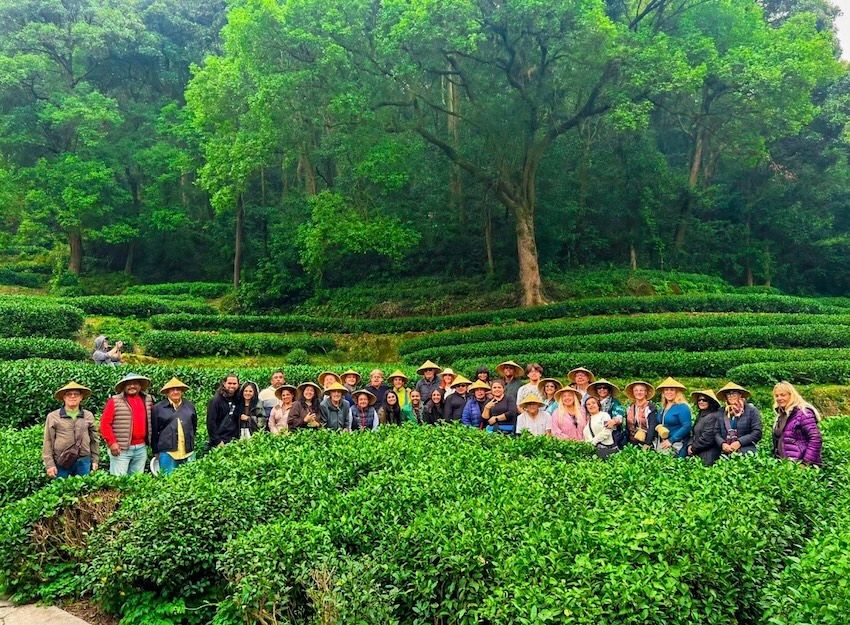
We've already visited the Great Wall and the Forbidden City, shopped for pearls in Wuxi, toured a silk museum and cruised the canals in Suzhou, and experienced a tea ceremony in Hangzhou. What's next on our list? Shanghai, of course!
Shanghai is the place where you will see the future of China. One side of the Huangpu River is home to the Bund, a stretch of magnificent old banks that were built in the times when the world’s trading firms set up shop here. The opposite side is where the Lujiazui towers can be seen. It is a glass wall of skyscrapers, including the tallest in the country, the 632-metre Shanghai Tower.
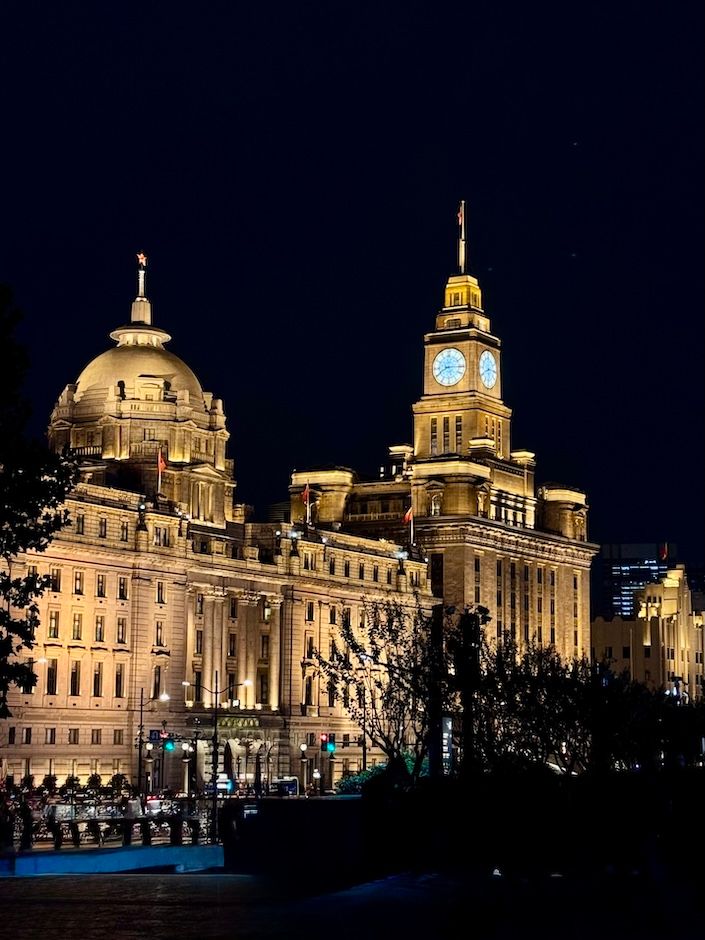
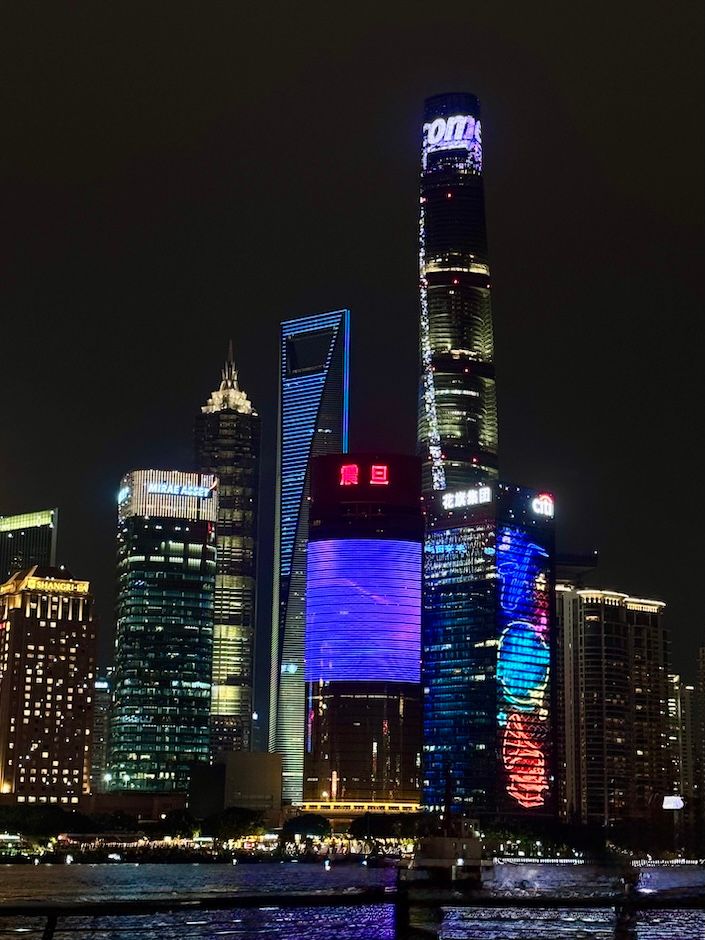
It is best to view the Bund from the water. A one-hour Huangpu River Night Cruise will take you right through the middle of the two city skylines. From here on, it’s up to your clients. Your clients may have a cocktail at a rooftop bar above the Bund, leisurely stroll along the renovated streets of Xintiandi with its cafes and concerts, or join the locals at the old French Concession with its pubs open till late at night. For those who prefer something more relaxing, the ERA acrobatic show makes a great evening on its own.
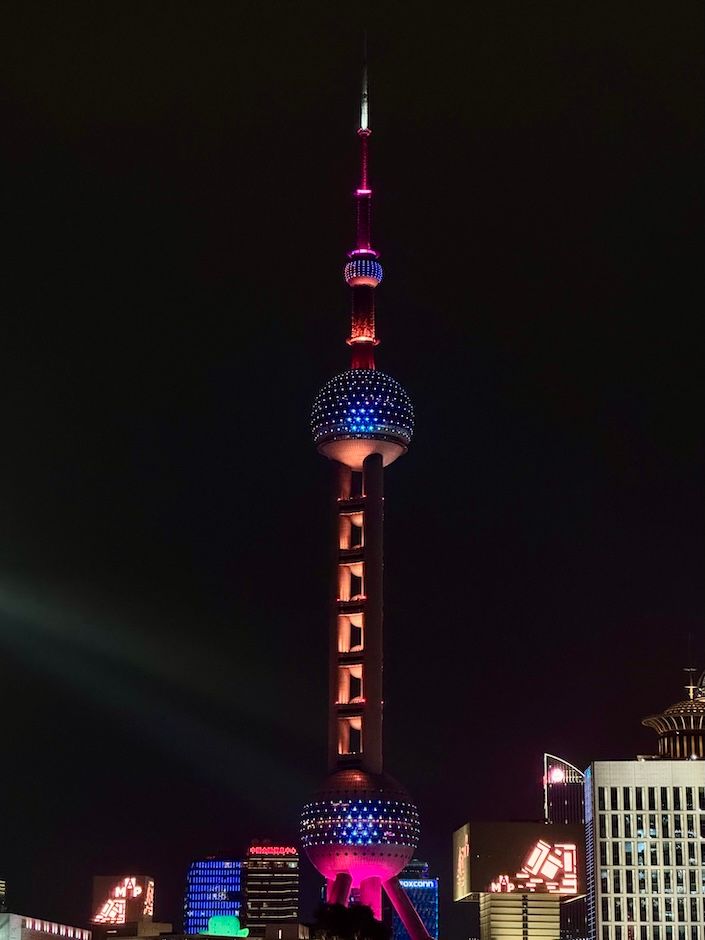
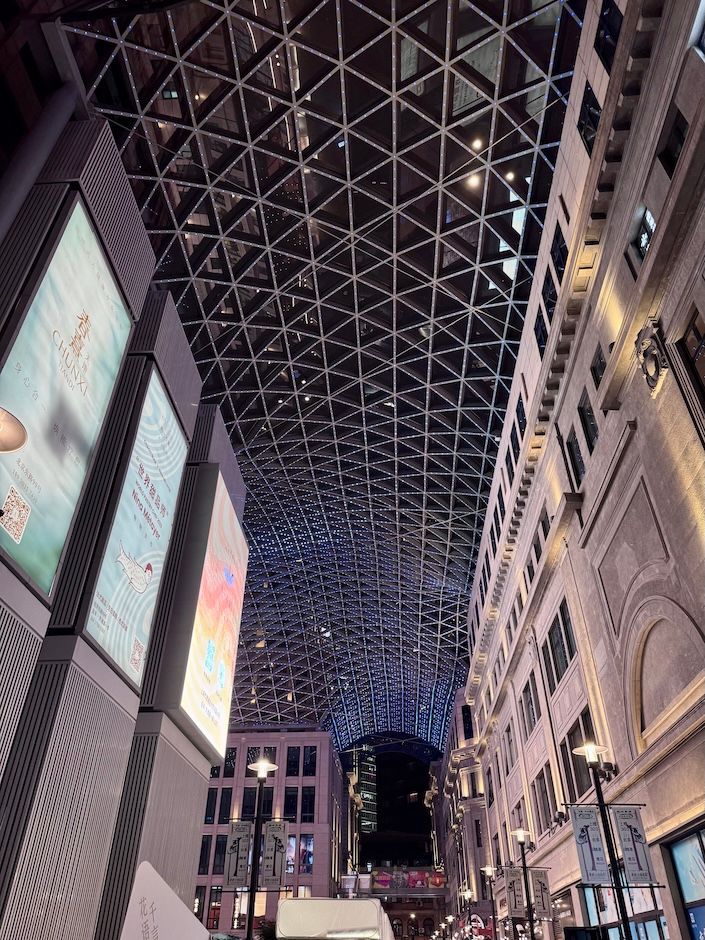
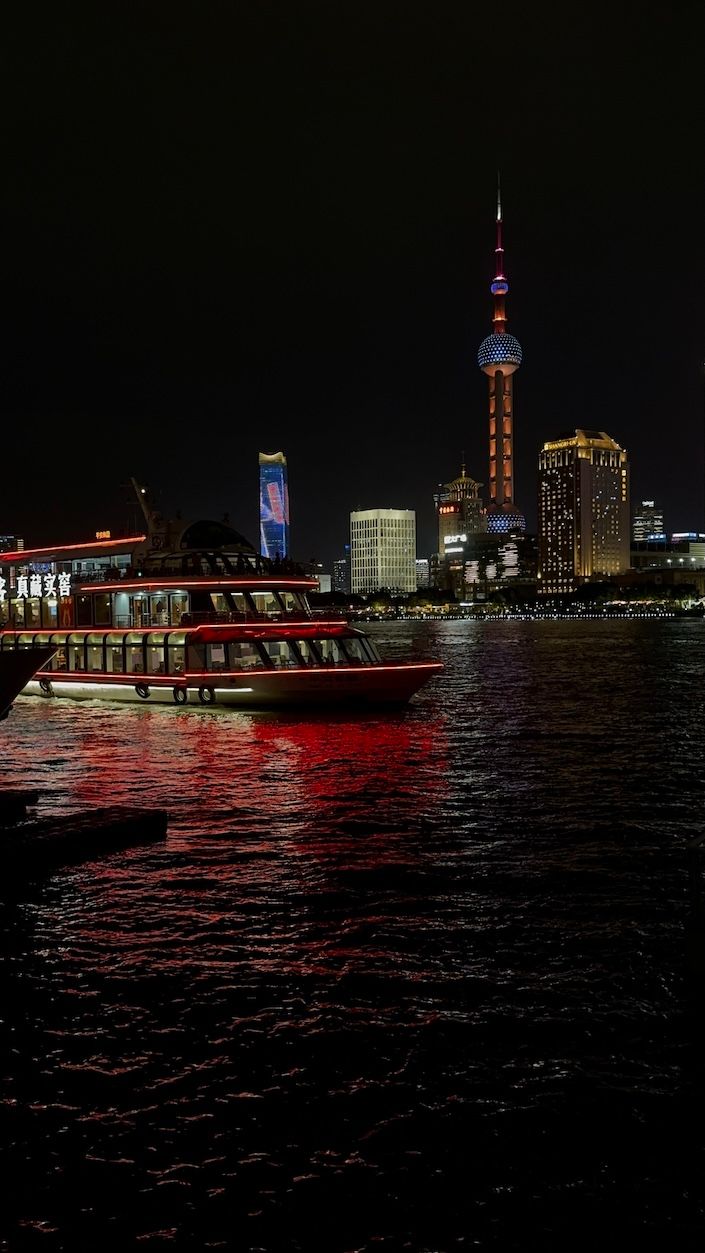
And this is where my safety comment comes from. 11 pm, all-female group and the Bund. Shanghai is the most populated city in China with about 24.85 million people, and I’ve never felt safer. In a city that size, at that hour, I expected to be looking over my shoulder, and I never did.
The city of Shanghai is equally fascinating in daytime as well, and that is why I recommend to spend some more days at the end of your tour. The Shanghai History Museum, the city God Temple area market, the observation deck of the Jin Mao Tower, these are just some of the attractions to see during a daytime visit. But the main attraction of all would be the shopping, which can take up the whole day in itself.
“My client won't eat anything there”
I heard this one before I left more than any other, usually with a worried face attached.
Here is what happened instead. Our first lunch in Beijing was Peking duck, in the city that invented it. That same night we sat down to an imperial-style banquet with musicians and dancers. In Suzhou, the welcome dinner was at Songhelou, a restaurant that has been feeding the city since the 1700s. My own favourite was …. breakfast at the hotel. You read that right. Breakfast was something I was very much looking forward to after I realized what you can expect at the Chinese hotels. While the hotels we’ve been staying at had all the North American breakfast favourites like bacon, eggs and toast, other items in the buffet represented traditional Chinese cuisine dishes like morning noodle soups, various dumplings, lots of steamed and roasted vegetables and even stir-fries! It was like going to a traditional Chinese buffet every morning.
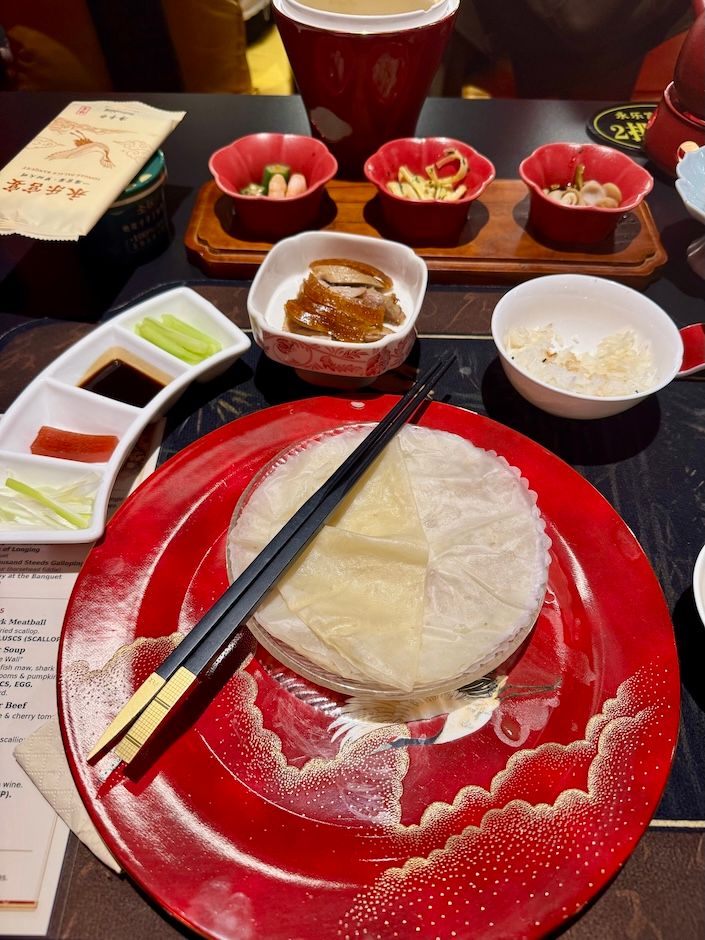
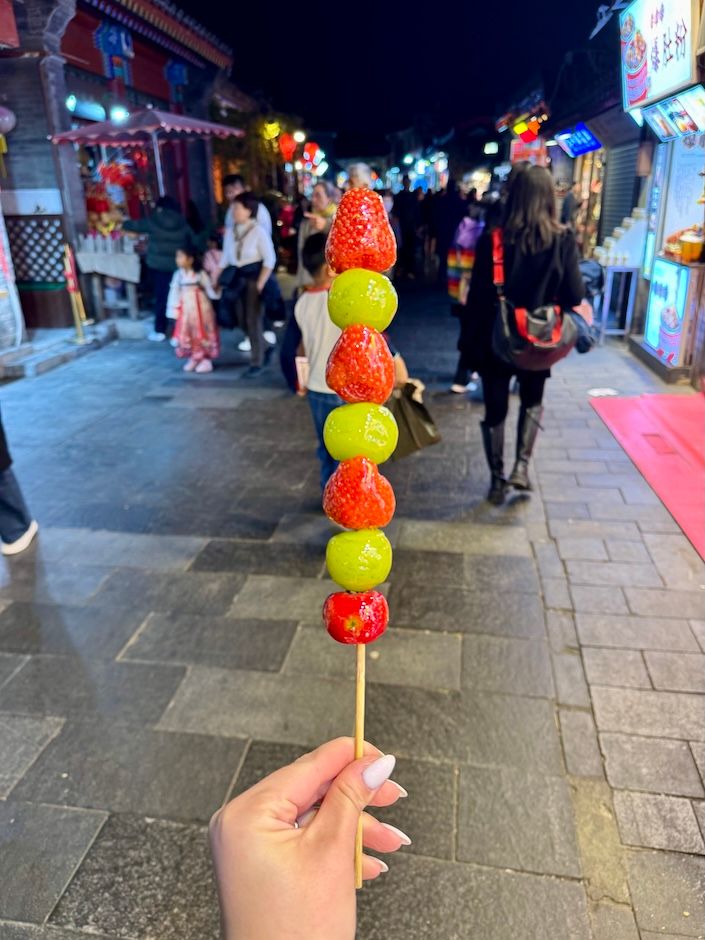
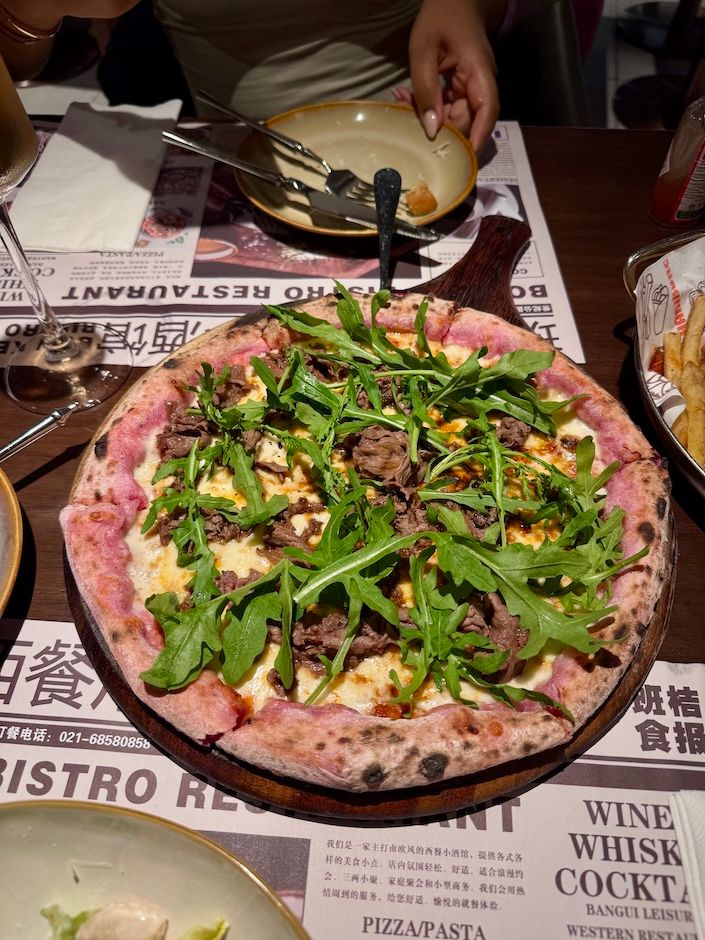
Peking Duck Tanghulu Wagyu Beef and Taro Pizza
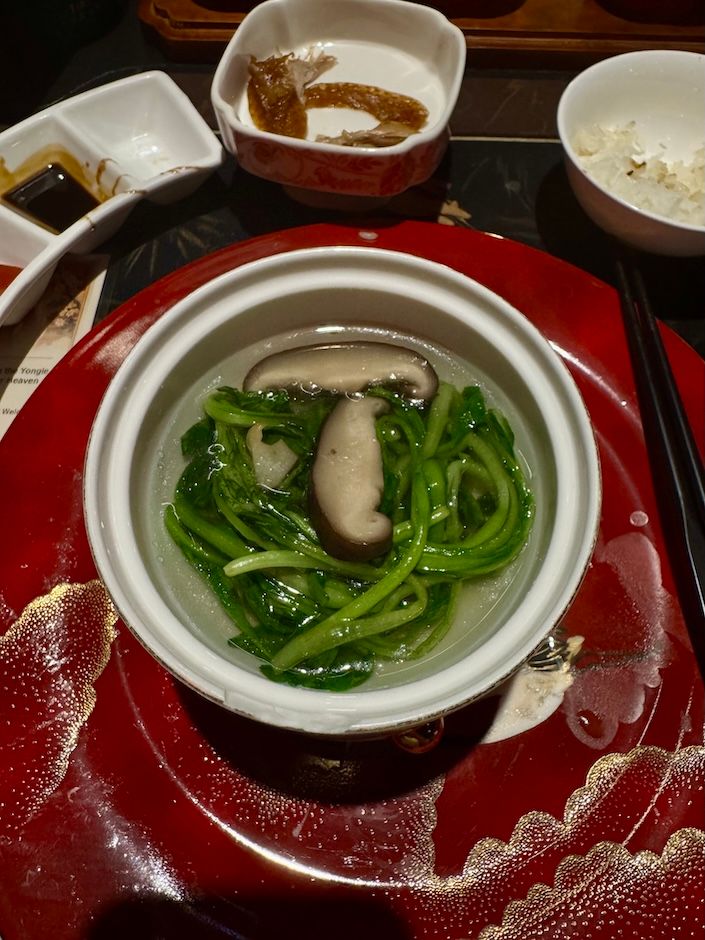
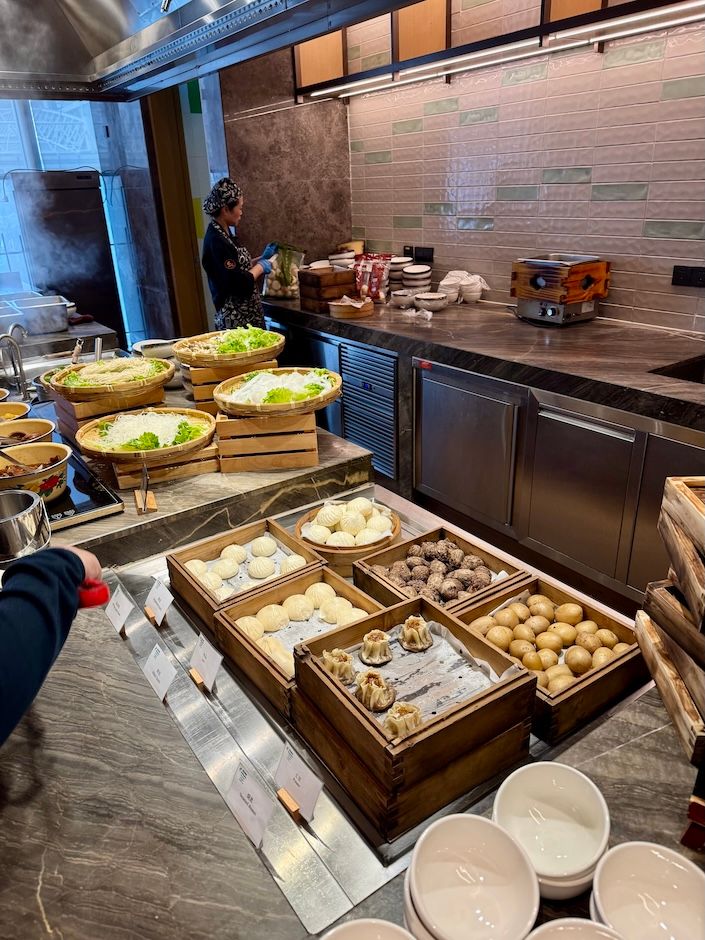
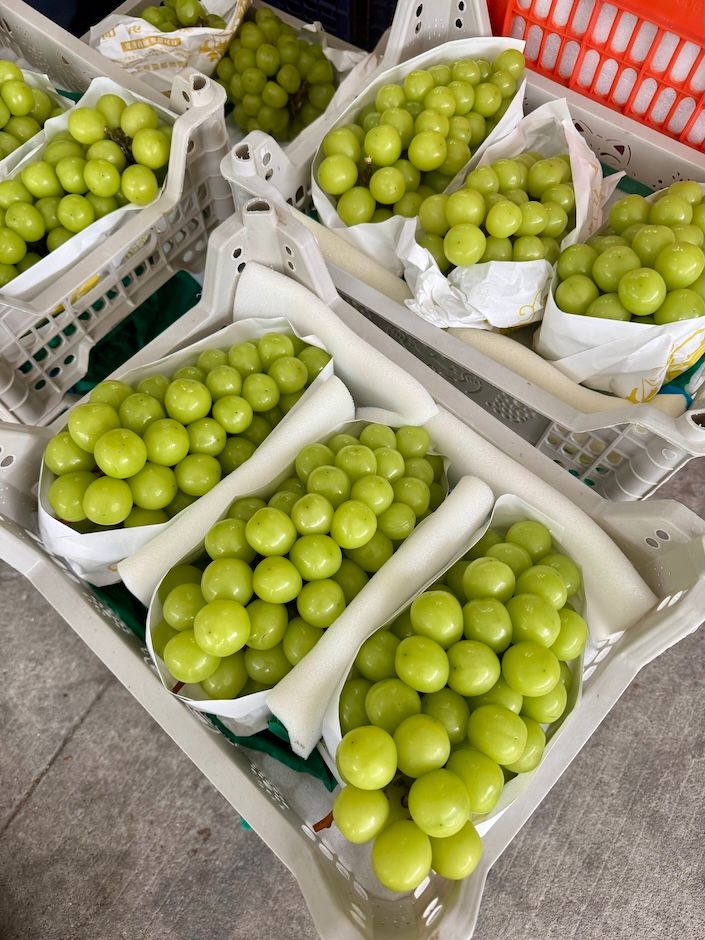
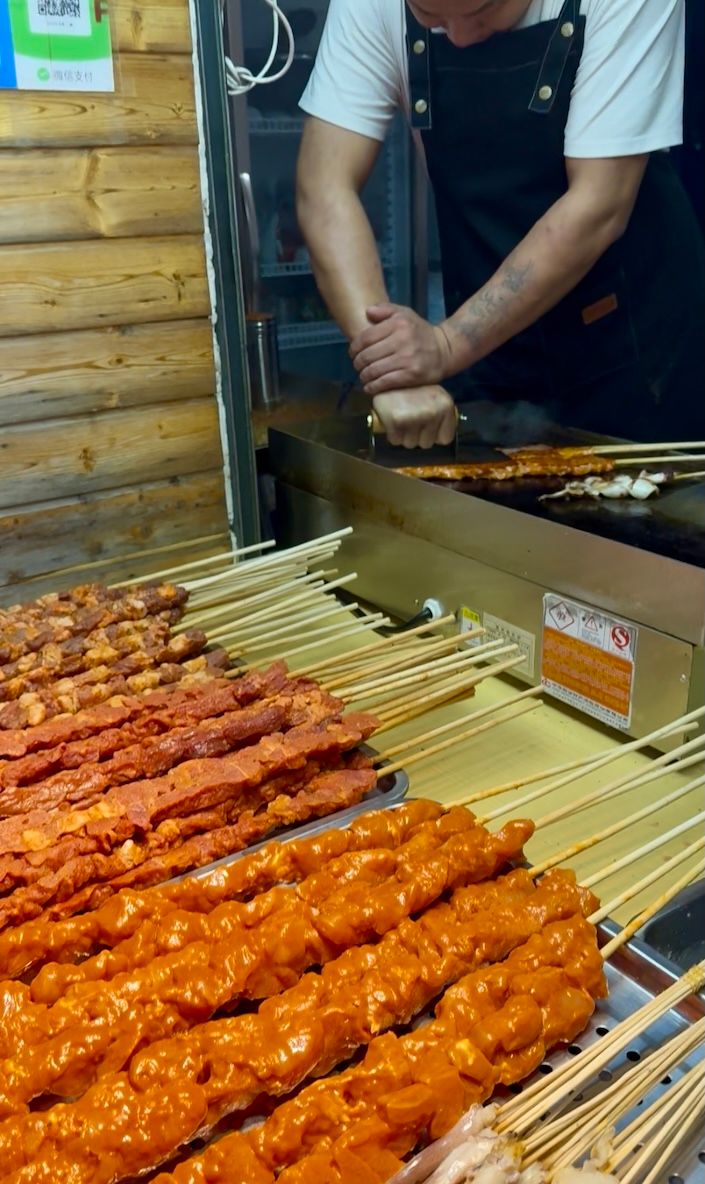
Now, the picky eaters. If you are visiting a traditional Chinese restaurant, especially with a group, you will often be served many dishes that you will be sharing with a group, so nobody gets handed one plate and told good luck. Dishes keep arriving in the middle of the table, and you take what you like. There is always rice, there are noodles, dumplings, plain vegetables, chicken. And the idea that everything is fiery is simply wrong. The cooking around Suzhou and Shanghai is mild, even a little sweet.
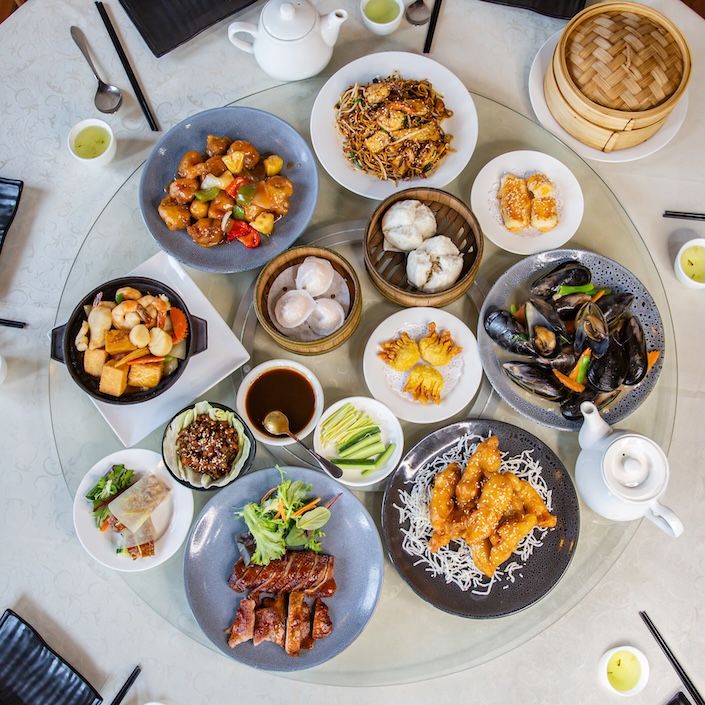
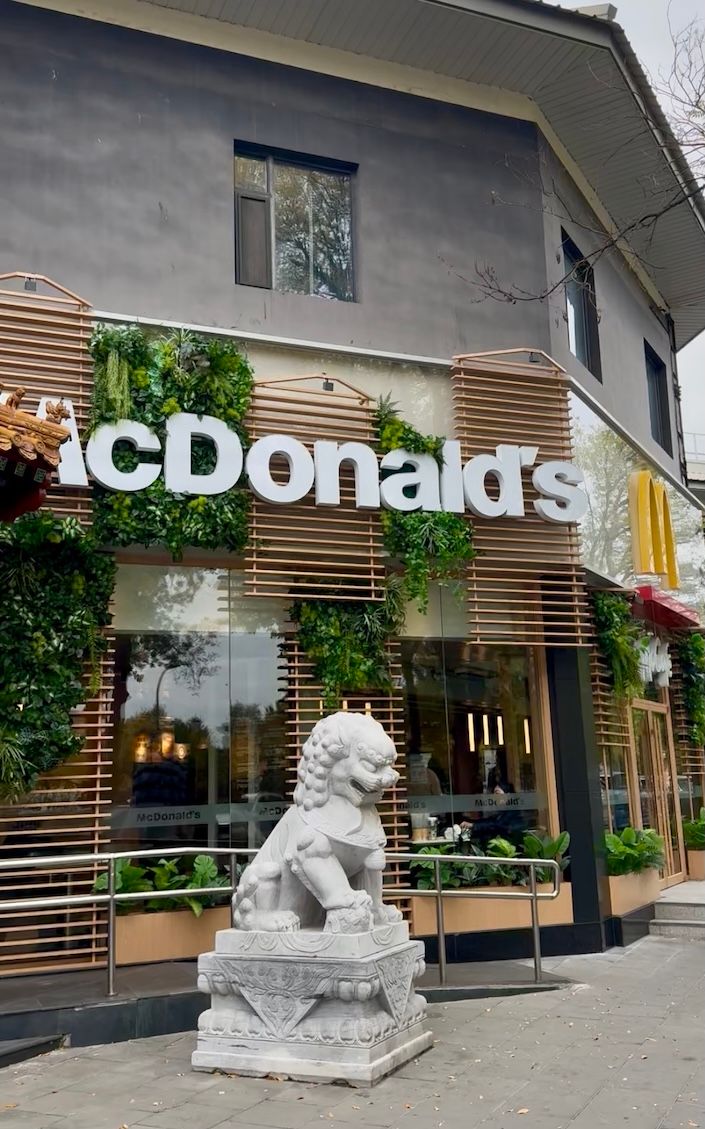
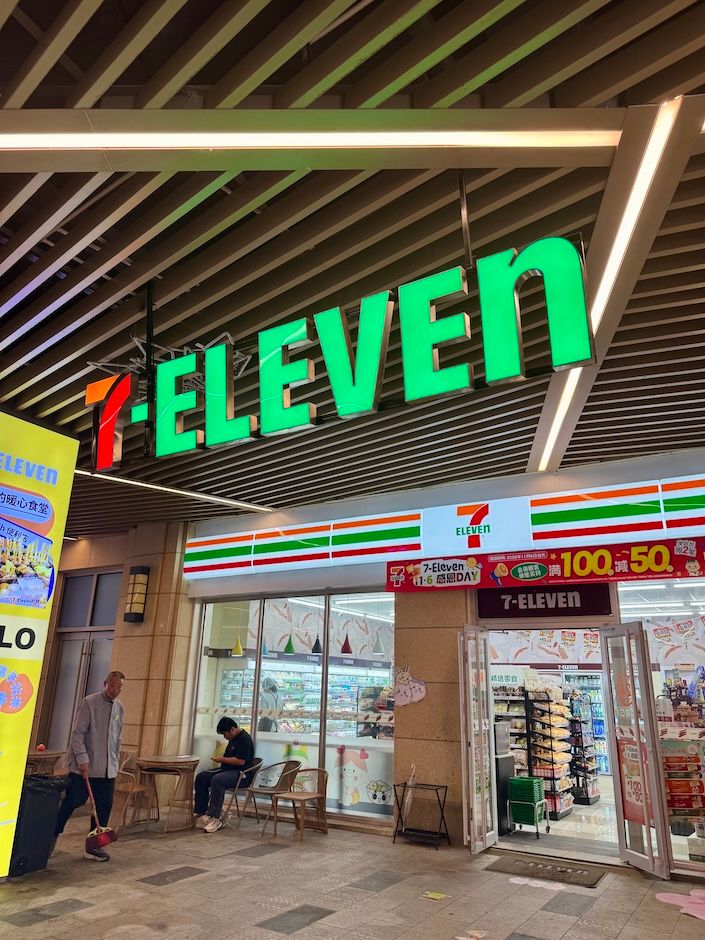
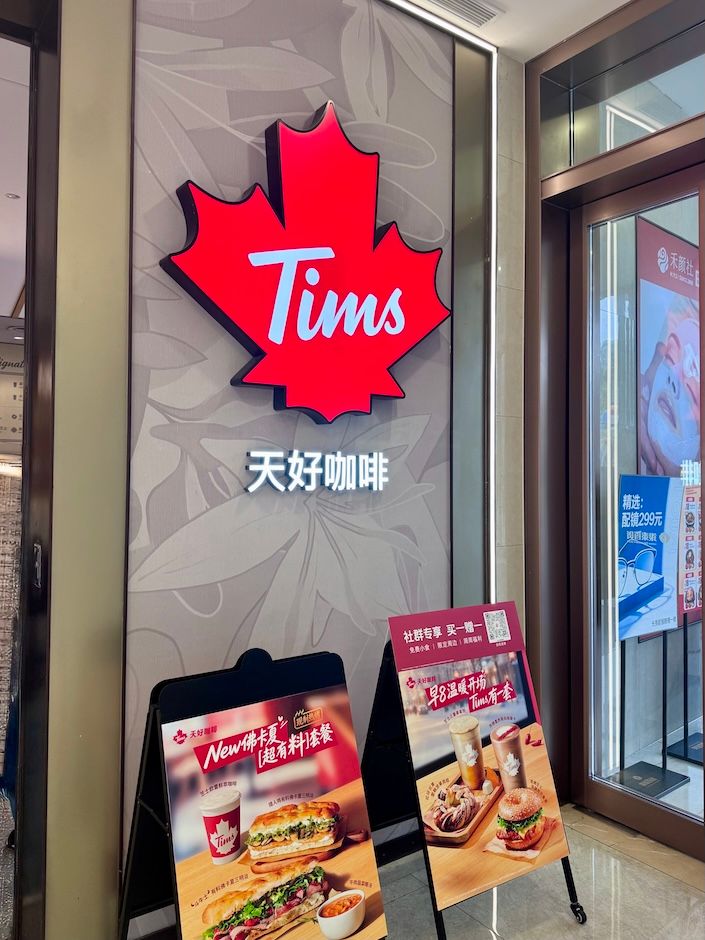
On the days when lunch or dinner was on our own, finding something was never the problem. Choosing was. So when a client tells you they are a difficult eater, you can tell them they will have more choice in China than on most European coach tours. And yes, for extremely picky eaters, fast food is always available, like McDonald’s, Burger King, KFC, world-famous 7-Eleven and even Tims in some places.
“It's too complicated”
It used to be, a bit. Until this year, a Canadian needed a visa just to get in. Since February 17, 2026, Canadian passport holders can enter China visa-free for up to 30 days. The policy currently runs to December 31, 2026, so check where it stands before you quote a 2027 departure.
As for the trip itself, I'll be honest: I would not have wanted to organize those eight days on my own. Five cities, a bullet train, timed entries at the Forbidden City, a different local guide waiting in each place. I didn't have to think about any of it, and that is where Maplelux Holidays comes in.
Maplelux is the new Canadian tour operator that hosted us. New name, not new people. Founder Rose Yang also runs the Ali Travel agencies, and Hugo Rocha and Gabby Avalos bring more than 50 years in the business between them. China is their best seller, and after the week I had, I understand why they wanted agents to see it in person.
The hotels were names your clients already know, Howard Johnson in Beijing and Holiday Inn in Wuxi and Suzhou, and then the Artyzen Habitat in Shanghai, which was a real step up. The pace was full but never frantic, and the guides were the kind who answer your fifteenth question as happily as your first.
For agents, here is the part to write down:
- A standard 12% commission across the whole product line, with extra on selected promotions
- Group tours with guaranteed departures. The Grand China Experience, which covers much of the route we travelled, starts under $1,400 per person, land only, for 11 days
- Private tours that go with as few as two travellers and never more than four
- A $100 per person deposit when you book individual tours 100 days or more ahead
- On select group tours, the 17th traveller goes free (land only)
- Quotes confirmed right away or within 24 business hours
China travel tips
You might have heard of some common tips about China travel, but here are some I would share with anyone who is planning a trip there:
- Payments: Before you leave Canada, download Alipay and WeChat Pay and link your credit card to both. They’re easy to use, and almost every vendor in China takes mobile payments, from restaurants to street stalls. One thing to know: payments of 200 yuan (about CAD 39) or less are free, but anything above that carries a 3% service fee on the full amount. Please note that users must activate their bank card before leaving Canada by following the bank’s verification process. This commonly requires receiving an SMS verification code on the Canadian mobile number registered with the bank. If roaming is enabled, the confirmation message may not be received; therefore, this step should be completed in Canada prior to departure.
- Staying connected: Several companies sell eSIMs for China, but some services need a phone number to work (it doesn’t have to be a Chinese one). The simplest option is to ask your Canadian provider about a China travel plan; most of them offer one. A Canadian travel plan, roaming, or an eSIM bought in Canada will also let you use apps that are blocked in China, such as Gmail, Facebook, Instagram and WhatsApp.
- Wi-Fi: Free Wi-Fi is easy to find in China, including at the hotels you’ll be staying in. Just keep in mind that on local Wi-Fi, apps like Gmail, WhatsApp and Instagram won’t work. If you need them, switch to your Canadian travel plan or eSIM data instead.
- Getting around: For exploring on your own, download Amap or use your phone’s built-in map app. Google Maps isn’t widely used in China and may be missing information.
- Passport: I cannot stress this enough. Please make sure to take your passport with you every day, as it will serve as your ID for transit and attraction ticket admission.
- Taxis: Uber doesn’t operate in mainland China, but its local equivalent, DiDi, works just as well. You can use it in English with your Canadian phone number and credit card. I recommend DiDi over hailing a taxi on the street: it’s usually cheaper, you see the price before you book, and you can type your destination in English, so there’s nothing to explain to the driver.
So, would I send clients?
Yes, and not only the adventurous ones. I would send the couple who have visited Italy three times but want something to really surprise them. I would send the history buff, the photographer, the friend who plans every vacation around dinner. I would even send the anxious first-time traveller, as long as they’re on an escorted trip with someone else holding the train tickets.
I went to China with other people's opinions. I came back with my own, and they're a lot better.
But hey, you don’t have to trust me! Watch these testimonials from agents who have visited the destination for the first time:
If you are planning to visit China, check out this article that talks more about the connectivity, payments, etiquette and a quick pre-departure checklist.
To learn more about Maplelux Holidays and their China programs, please visit www.mapleluxholidays.com. Missed the China FAMs? The next one goes to Japan in April 2027, and you can apply here.
By Kateryna Ivchenko