Where travel agents earn, learn and save!


News / $400 million in govt. aid for Transat, as high fuel costs weigh heavily on Q3 results
The high fuel costs were the big factor in Transat’s Q3 loss of $106.6 million, compared with a profit of $399.8 million in Q3 2025, when it recorded a $345.1 million gain related to its long-term debt

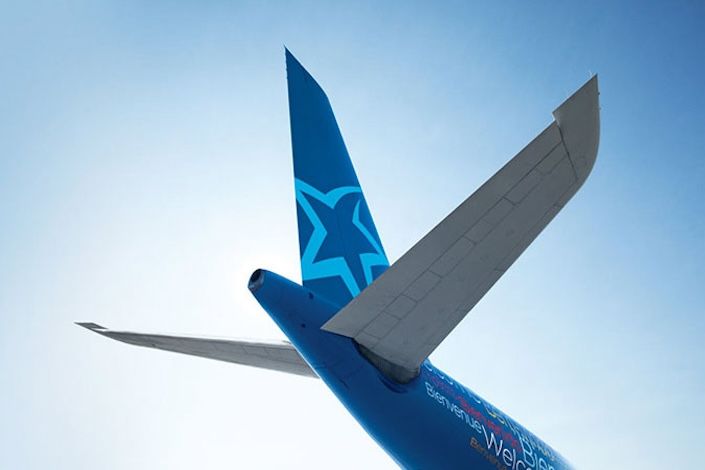
Transat will get an additional $250 million in emergency financing from the federal government as it deals with high fuel prices, on top of the $150 million it already received.
The news came with Transat’s Q3 2026 results, posted earlier.
The high fuel costs were the big factor in Transat’s Q3 loss of $106.6 million, compared with a profit of $399.8 million in Q3 2025, when it recorded a $345.1 million gain related to its long-term debt.
Revenue for the quarter was $792.7 million, up 3% from $766.3 million a year ago, despite a $35 million decline in revenue due to the constrained suspension of flights to Cuba. The increase in revenues was thanks to a 6% increase in traffic.
“Our third-quarter results were significantly impacted by sustained higher fuel prices, which remained elevated well beyond expectations and were the primary driver of lower profitability,” said Transat’s President and CEO, Annick Guérard.
“We remain focused on restoring Transat’s profitability. We continue to take concrete actions to reduce costs and improve productivity, while maintaining focus on two major strategic initiatives: the launch of our loyalty program by the end of 2026 and the modernization of our cabin interiors, which will significantly expand our Premium offering beginning in the second half of 2027,” she added.
“Intense Competition & Broader Economic Environment”
Across the entire network, Transat’s capacity increased 6% year over year, with transatlantic capacity in particular up 8%.
The company has been dealing with persistent issues with Pratt & Whitney’s GTF2 engines, and those issues continue to weigh on revenue management, along with inefficiencies from the partial redeployment of capacity initially planned for Cuba.
With its Q3 results Transat also noted that revenue growth was also held back “by competition that remains intense and by the broader economic environment.” Across all markets, Transat reported a load factor of 84.7%, down slightly from 85% year over year.
Jean-François Pruneau, Chief Financial Officer, said Q3 fuel costs increased by $105 million on a gross basis year over year, reflecting a 56% increase in fuel prices – and bringing the estimated cumulative impact since the beginning of the fuel crisis to approximately $175 million.
While revenues grew with added capacity, competitive market conditions limited Transat’s ability to pass the higher fuel costs on to customers, resulting in softer load factors and yields, said Guérard.
The financial support received from the Canada Enterprise Emergency Fund (CEEFC) “provides additional liquidity and financial flexibility as we navigate this challenging environment,” she said.
Source: Travelweek