Where travel agents earn, learn and save!


News / Fuel bill for world’s airlines will soar from $252 billion to $350 billion, fare hikes inevitable: IATA
Fuel costs are expected to rise by nearly 40%
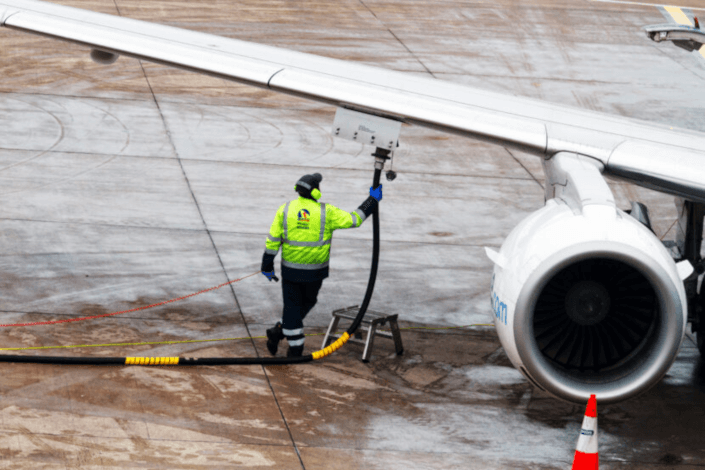
Fuel costs are expected to rise by nearly 40% from $252 billion in 2025 to $350 billion in 2026, according to IATA’s latest outlook.
Released at IATA’s 82nd AGM in Rio de Janeiro June 6-8, the 40% stat underlines the pressure facing the world’s airlines amid tensions in the Strait of Hormuz resulting from the U.S. and Israel’s war with Iran.
The extra $1 billion for fuel is based on an expected average price of crude oil at $95/barrel (Brent) for the year (up 37% from $69 in 2025). Jet fuel prices are expected to average $152/barrel for the year (up almost 70% on $90 in 2025). The crack spread (premium for jet fuel over Brent crude oil) is expected to average $57/barrel, an historic high.
IATA notes that globally, airlines have hedged roughly one third of their expected fuel consumption for 2026. Hedging helps, but doesn’t eliminate exposure to sustained price increases, says IATA.
With total fuel consumption expected to stay steady year over year, it’s the rise in the price of jet fuel that’s to blame for lifting the share of jet fuel in total operating expenses to 31.4% in 2026, up from 25.4% in 2025.
Airlines are expected to achieve a combined total net profit of $23.0 billion in 2026. That’s roughly half the previously projected $41 billion. It is also roughly half the $45 billion net profit estimate for 2025.
The net profit margin is expected to be 2% in 2026, also roughly half the previously projected 3.9%. It is also less than half the 4.2% estimate for the 2025 net profit margin.
“War-related disruptions in the Middle East and rising fuel costs have shifted the outlook for airlines to the worse. Globally, airlines are expected to see profitability halve compared to 2025. Profits will shrink from $45 billion in 2025 to $23 billion this year. And margins will shrink from 4.2% to 2.0%. All airline bottom lines are suffering from the rapid 70% rise in jet fuel prices. Some of the additional cost is being recuperated by adjusting prices and improving efficiency, but it will not be sufficient to maintain profitability at the previous year’s level. Smaller carriers that started the year with weak balance sheets are certainly struggling. At the regional level, all are in the black but with sharply reduced financial performance, with the exception of the Middle East. The Gulf carriers face operational uncertainty following a near complete shutdown of airspace at the outbreak of the war. These carriers are doing an amazing job maintaining connectivity, but major financial impacts are unavoidable,” said Willie Walsh, IATA’s Director General.
Even in the best of times, the airline industry as a whole suffers from low margins and returns below the cost of capital. The oil price shock has tested airline financial resilience as net margins have been squeezed to 2.0% globally, he said.
Walsh added: “Airlines are bearing the brunt of the fuel price shock. While air fares are rising, airlines are still absorbing part of the hike in their bottom lines. Net profit per passenger is expected to fall to $4.50, half of what it was last year. Under the circumstances, that shows resilience. But it won’t even buy you a hot dog at most of the FIFA World Cup venues and it does not leave much of buffer should other costs or taxes start rising.”
As reported in The Guardian, Walsh said fares will rise “inevitably,” and called these times for airlines and the travel industry “challenging and unpredictable” with wafer-thin margins.
“High oil prices will inevitably mean higher ticket prices. There’s just no way to avoid that. … The big unknown is how long travellers and shippers can tolerate the higher costs of connectivity,” said Walsh.
According to IATA’s forecasts, passenger numbers are expected to reach 5.1 billion in 2026 (up 2.4% on 2025).
Also at the AGM, IATA launched ‘Save a Life, Not a Bag’, a new passenger safety campaign urging travellers not to take cabin baggage during an aircraft evacuation. The campaign responds to the growing number of cases where travellers have stopped to collect their baggage or take photos during aircraft evacuations.