Where travel agents earn, learn and save!


News / Canadians are turning to Europe as demand holds strong for 2026
Europe's cultural richness and variety of experiences help to generate a strong demand

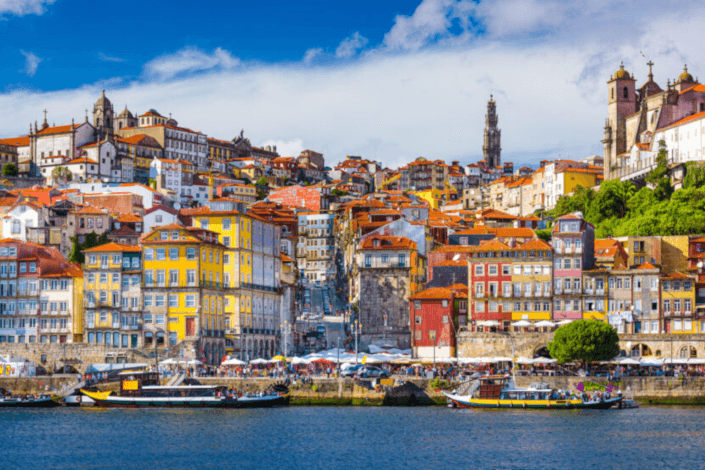
Photo: Porto, Portugal
Carol Murray can hardly keep up with her Europe bookings.
The Toronto-based travel advisor and owner of Your Vacation Home says sales have been “booming”, with Spain, Portugal and Southern France selling particularly well in recent months.
“I have so many retired clients who are used to spending the winter in the U.S., but due to the current political climate, they are choosing to go to Europe instead,” she tells Travelweek.
Her experience reflects a broader trend playing out across the Canadian market, where Europe’s perceived stability, cultural depth and wide-ranging experiences are helping sustain strong demand heading into the peak summer season, despite geopolitical tensions and rising travel costs.
According to Sandra Bailey Moffatt, Country Director – Canada, Tourism Ireland and Chair of the European Travel Commission’s Canada Chapter, early indicators suggest a nuanced outlook, balancing cautious sentiment with longer-term growth.
“While we don’t track bookings directly, early 2026 travel sentiment suggests Canadians are a bit more cautious this year,” she tells Travelweek. “ETC’s data from early 2026 shows that intent to travel to Europe has edged down slightly.”
Cost remains the primary barrier, alongside a somewhat stronger interest in domestic travel. However, that softer sentiment does not fully reflect the longer-term trajectory.
“The latest Europe’s tourism trends report from ETC noted that Canadian arrivals to Europe are expected to grow at an annual average of 4.2% through 2029,” she adds.
Airline capacity is also signalling confidence in the market. “We’re seeing a significant increase in capacity for summer 2026. Air Canada is pencilling 326 one-way departures to Europe, representing a 30% increase compared to last year. This points to a promising summer.”
Shifting demand
Europe continues to benefit from its long-standing reputation as a stable and reliable destination, a factor that remains top of mind for travellers navigating global landscape.
“Historically, Europe has been seen as a stable and reliable destination during periods of global uncertainty, and there are early signs that this perception remains intact,” says Bailey Moffatt.
She adds that safety continues to be a key competitive advantage. “ETC’s international traveller sentiment research from early 2026 also highlights that safety remains one of Europe’s strongest competitive advantages.”
Retail advisors are seeing this play out in real time. Valerie Murphy, a travel advisor with Vision Travel in Waterloo, ON, says client behaviour is shifting.
“I think the increase for Europe is because a lot of people are choosing not to travel to the U.S. That goes the same for Canada. I’m also hearing from clients that they still want to check off their bucket-list destinations,” says Murphy.
Steady growth for tour ops
From a tour operator’s perspective, demand for Europe remains steady, with some segments showing notable gains.
Christian Leibl Cote, Executive Vice President of Global Sales at Collette, says bookings are holding firm with a slight upward trend. “Bookings are tracking very similarly year over year, with a slight increase looking ahead to summer 2026.”
Momentum is particularly strong beyond the traditional peak season, with Collette seeing nearly double-digit growth in fall Europe bookings from Canadian travellers, suggesting increased confidence in the region and strong long-term demand.
This may be due to evolving traveller preferences, with more people looking to avoid crowds and rushed itineraries.
“We’re seeing premium and luxury travellers place a stronger emphasis on slower paced itineraries that allow more time to truly experience each destination,” says Leibl Cote.
This shift aligns with broader data from the European Travel Commission.
“Recent ETC data points to a clear shift in how Canadians approach travel to Europe,” says Bailey Moffatt. “There is a strong preference for travelling outside the summer months, with many (64%) opting for trips outside of the traditional peak.”
Where Canadians are going
Traditional European destinations continue to dominate, though there are clear signs of diversification.
“Based on 2025 data, Canadian travellers continue to favour Europe’s most popular destinations. Countries such as Portugal, Spain, Germany and Türkiye remain among the top choices,” says Bailey Moffatt.
Regional preferences also play a role. “Data from our partners shows particularly strong appeal among French-speaking Canadians for France, highlighting how cultural and linguistic connections continue to shape travel preferences from Canada.”
Looking ahead, tour operators expect interest to expand further.
“Portugal saw exceptional demand last year, with Italy and Ireland also ranking among the most popular choices for Canadians,” says Leibl Cote. “Looking ahead, we expect destinations like Switzerland and Norway to gain traction as travellers seek scenic, immersive experiences beyond the traditional hotspots.”
Secodary destinations
One of the clearest emerging trends is growing interest in lesser-known destinations, says Bailey Moffat.
“While traditional destinations still dominate overall volumes, 2025 figures show particularly strong arrival growth in countries such as Finland (+26%) and Estonia (+20%), as well as increases in overnight stays in Norway (+29%) and Iceland (+18%).”
Several factors are driving this shift, she adds, including a more conscious effort to avoid overcrowding in major cities as well as growing climate considerations, with northern destinations offering milder summer temperatures.
Leibl Cote is seeing similar behaviour among Collette clients.
“Travellers are increasingly interested in slowing down and discovering off-the-beaten-path experiences, particularly through small group exploration travel.”
He adds that deeper connections are becoming a priority. “We’re seeing strong growth in Canada for itineraries that prioritize deeper local connections, where guests spend more time engaging with communities rather than rushing between landmarks.”
Pricing pressures remain
Despite strong demand, pricing continues to be a key consideration.
“At the moment, it’s still a bit of a balancing act,” says Bailey Moffatt. “On one hand, we’re seeing increased air capacity between Canada and Europe, which could help ease some pricing pressure, especially on competitive routes. On the other hand, rising jet fuel prices are pushing costs up, and that’s likely to feed into airfares.”
Murphy says her clients are already feeling the impact. “I find the prices much higher this year especially for hotels and airfare. I feel like clients are expecting it though; since the cost of living is high, they aren’t surprised by travel prices being high, too. I don’t think they are happy about it but they’re also not surprised.”
Murray echoes that sentiment, noting that while airfare has remained relatively stable for now, hotel rates have climbed significantly and increases may still be ahead.
“While there is not much I can do about prices, I do try and find them the best value overall. The demand seems to be there regardless,” she says.
Tour operators are also working to provide stability.
“While pricing pressures continue globally, Collette offers price protection by securing components well in advance, which helps shield travellers from future fluctuations,” says Leibl Cote. “Our goal is to remove uncertainty and ensure guests can book confidently without worrying about unexpected price increases closer to departure.”
Opportunities for advisors
As travellers navigate a more complex booking environment, travel advisors may have an opportunity to play an increasingly important role.
“The latest sentiment data from early 2026 shows that 44% of Canadians tend to plan their trips independently,” says Bailey Moffatt. “That said, we know that Canadian travellers value expert advice, time savings and the ability to handle emergencies.”
“In times of uncertainty, there is the possibility that travellers will look for further reassurance and support which could benefit travel advisors.”
Evolving traveller priorities are also opening new opportunities.
“Canadians are prioritising experiences over traditional categories,” she adds. “Food and beverages (73%), as well as activities (52%) are among the top areas of expenditure.”
There is also a growing emphasis on responsible travel, including interest in less crowded destinations and more meaningful local engagement.
Outlook for 2026 & beyond
Overall, the outlook for Europe remains positive, even as market conditions continue to evolve. While cost pressures and global uncertainty may influence short-term decisions, Europe’s strong reputation, expanded air capacity and evolving travel styles are helping sustain demand.
“The main question mark, really, is cost,” says Bailey Moffatt. “With rising fuel prices, there’s pressure on airfares, and that could influence how much of this potential shift actually translates into bookings.”
Even so, the longer-term trajectory points to continued growth, supported by strong traveller interest and repeat visitation.